What Bulk Buying Actually Means for Your Budget
Buying in bulk means purchasing larger quantities of a product at a lower cost per unit than you'd pay for smaller packages. The appeal is straightforward: pay less per ounce, per roll, or per serving. But the real-world savings depend on a set of factors that don't show up on the shelf tag.
The first variable is usage rate. If your household uses a product regularly and consistently, buying more upfront locks in a lower unit price over time. The second is shelf life. A product that expires before you use it doesn't save money — it creates waste. The third is storage: bulk items need somewhere to go, and not every home has the pantry or garage space to accommodate 48 rolls of paper towels.
For a fuller picture of where upfront spending pays off versus where it doesn't, see our guide on home essentials and where spending more actually pays off. The Smart Shopping Tips hub also covers how to evaluate everyday purchase decisions more broadly.
Lower cost per unit on stable products
Bulk packaging typically offers a meaningfully lower price per ounce or unit compared to standard retail sizes, a gap that adds up over time on frequently used items.
Fewer shopping trips needed
Stocking up on household staples reduces the frequency of store visits, saving time and reducing exposure to impulse purchases that drive up total spending.
Protection against price increases
Buying ahead at current prices shields you from near-term price hikes on commodities like paper goods, cooking oil, or cleaning supplies.
Predictable supply of household essentials
Maintaining a buffer stock of staples reduces the chance of running out of critical items, which can lead to last-minute, full-price purchases at less competitive stores.
The Real Risks of Buying Too Much
The downside of bulk buying isn't complicated — it's waste. And waste takes several forms that aren't always obvious at checkout.
Food spoilage is the most visible. A large container of fresh produce, deli items, or even certain pantry goods can go bad before a household of two or three people finishes them. But spoilage isn't limited to food: cleaning products can degrade, paper goods can get damp in storage, and batteries lose charge over time.
There's also the risk of buying in bulk before you know whether you like or need a product. Committing to a three-year supply of a cleaning spray you've never used before is a costly experiment. The same logic applies to personal care items that might irritate your skin or clothing you haven't tried on.
Upfront cash flow is a real constraint too. A single bulk shopping trip can run several hundred dollars, which is money that's no longer available for other needs that month. For households on a tight budget, that concentration of spending can create short-term pressure even if the long-run math looks favorable. Our article on why cheap household items sometimes cost more explores how misleading low-price logic can be in both directions.
High upfront cost strains monthly cash flow
Bulk purchases often require spending significantly more in a single transaction, which can be difficult to absorb for households managing a strict monthly budget.
Waste risk from spoilage or non-use
Any product that expires, degrades, or goes unused before it's finished converts apparent savings into real losses — and food waste in particular has an environmental cost too.
Storage space requirements are often underestimated
Bulk quantities of paper goods, beverages, or dry goods require dedicated storage space that many apartments or smaller homes simply don't have.
Membership fees reduce net savings
Warehouse club memberships typically cost $50–$120 per year, a fixed cost that must be recovered through actual unit-price savings to make the membership worthwhile.
Risk of locking in on untested products
Buying 96 units of a product you've never tried creates a significant financial and practical burden if the item turns out not to meet your needs.
Which Items Are Worth Buying in Bulk
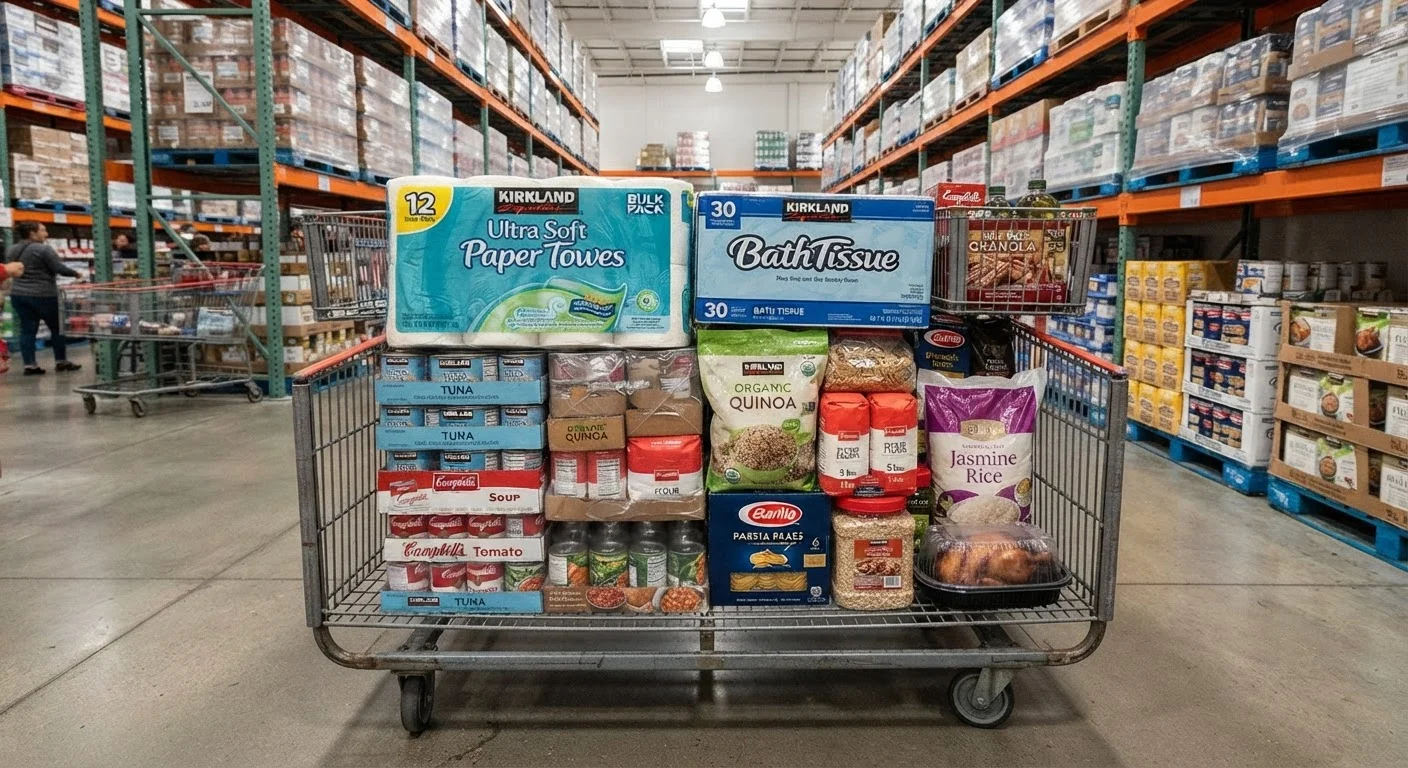
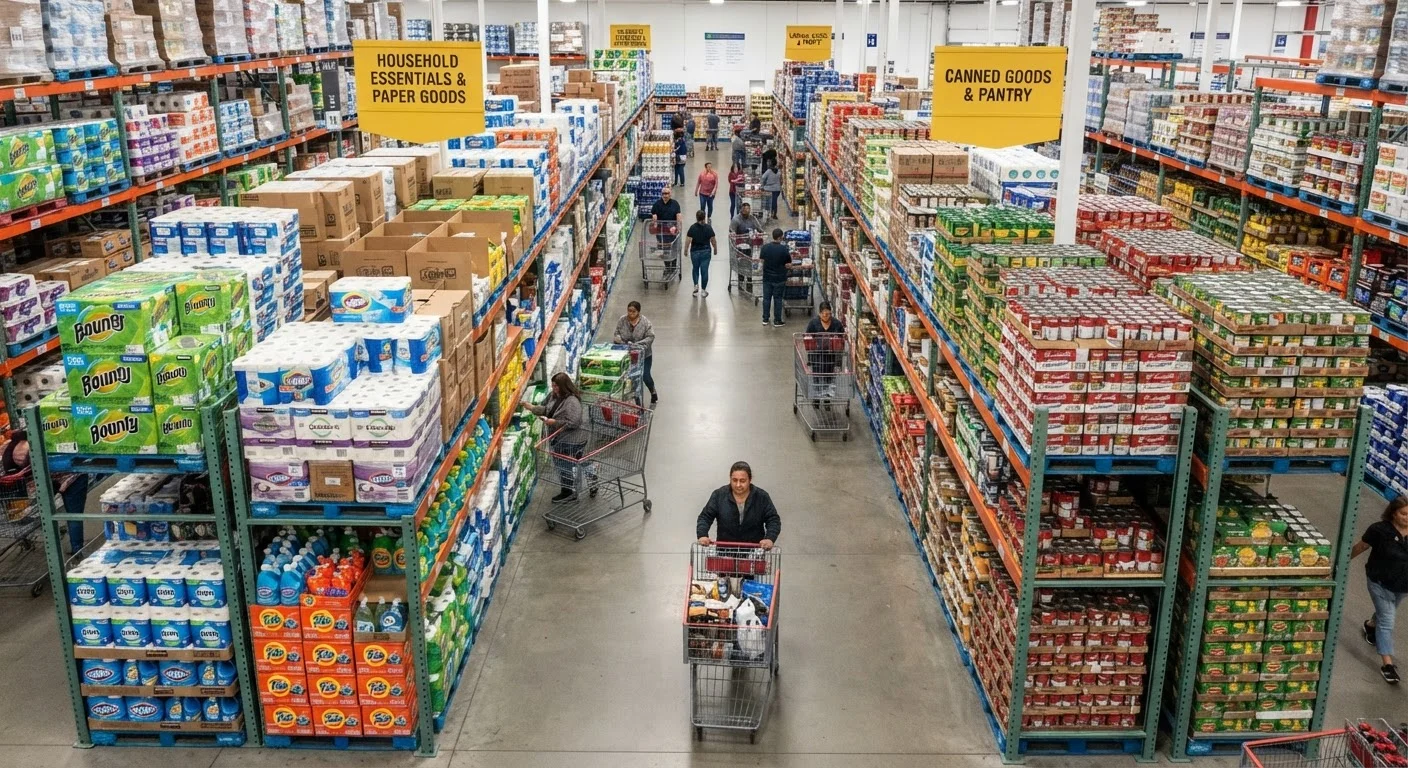
The clearest bulk-buying wins share a common profile: non-perishable, regularly used, and easy to store. Think toilet paper, paper towels, dish soap, laundry detergent, canned goods, dried pasta, rice, and coffee. These items don't expire quickly, every household uses them, and price per unit is the primary variable.
~20–30%
Typical unit-price savings on bulk staples
Industry estimates generally suggest bulk packaging offers unit prices 20–30% lower than standard retail sizes for comparable non-perishable goods, though this varies widely by category and retailer.
30–40%
Of purchased food wasted in average U.S. households
The USDA has estimated that U.S. households waste roughly 30–40% of the food supply, a figure that underscores why realistic consumption rates matter before buying perishables in large quantities.
Items that rarely make sense to buy in bulk include fresh produce, bread, specialty or flavored products (where taste fatigue sets in), medications with expiration dates, and anything you haven't used before. For a practical breakdown by category, our article on pantry staples that cost less when bought in bulk identifies specific products where the unit-price math reliably holds up.
One often-overlooked factor is the membership fee at warehouse clubs. If you spend $65 a year on a membership but only shop there occasionally, the fee itself can erase much of the unit-price savings. Running a rough annual calculation — total amount saved on unit prices minus the membership cost — gives you a clearer read on actual value. For more on cost-per-use thinking, see why the cheaper option sometimes costs more long-term.
Membership Fees: Do the Math First
Before committing to a warehouse club membership, add up what you realistically expect to save on unit prices over a year, then subtract the annual fee. Many consumers find the membership pays for itself on a handful of categories — paper goods, cleaning supplies, and pantry staples — but only if those purchases happen consistently. If you shop infrequently or buy mostly perishables, the math may not favor the membership.