
Why Wattage No Longer Tells the Whole Story
For decades, Americans picked light bulbs by wattage: a 60-watt bulb for a bedroom lamp, a 100-watt bulb for the kitchen. That mental shorthand worked when nearly every bulb was incandescent. It no longer does.
Today's LED bulbs produce the same amount of light as their incandescent predecessors using a fraction of the electricity. An LED drawing 9 watts can match a 60-watt incandescent in brightness. Wattage tells you about energy consumption — not light output. Two different bulbs can draw identical wattage and deliver very different amounts of usable light.
If you're setting up a new home, the room-by-room essentials guide is a useful companion for thinking through what each space actually needs — lighting included. But the first step is understanding the two numbers that matter most on a modern bulb package: lumens and color temperature.
Understanding Lumens: How Bright Is Bright Enough?
Lumens are the standard measure of visible light output. The higher the lumen count, the brighter the bulb. Here's a rough equivalency chart to orient you:
| Incandescent Wattage | Lumens (approx.) |
|---|---|
| 40W | 450 lm |
| 60W | 800 lm |
| 75W | 1,100 lm |
| 100W | 1,600 lm |
When choosing lumens for a room, consider the room's size, ceiling height, and purpose. General guidelines suggest 10–20 lumens per square foot for ambient living spaces, and higher for task-heavy areas like kitchens or home offices. A single overhead fixture rarely covers a whole room adequately — layering light from multiple sources (ceiling, table lamps, under-cabinet strips) usually produces a more functional result.
Start with a Lumen Target, Not a Wattage
When shopping for bulbs, lead with the lumen count you need for the space, then check wattage only to confirm it fits your fixture's maximum rating. This approach keeps your focus on light output rather than energy draw — the two numbers don't move in lockstep with modern bulbs.
Color Temperature Explained
Color temperature describes the tone of a light source and is measured in Kelvin (K). Lower Kelvin values produce warm, amber-toned light. Higher values trend toward cool, blue-white daylight tones. The practical range for home lighting spans roughly 2700K to 5000K.
Lumens
The unit that measures the total amount of visible light emitted by a bulb. More lumens means a brighter light.
Color Temperature
A measure (in Kelvin) of whether a light source appears warm and amber or cool and blue-white. Lower numbers are warmer; higher numbers are cooler.
CRI (Color Rendering Index)
A scale from 0–100 indicating how accurately a light source renders colors compared to natural daylight. Higher scores mean colors look more true-to-life.
Kelvin (K)
The unit used to express color temperature in lighting. Home bulbs typically range from about 2700K (warm) to 6500K (daylight).
LED
Light-Emitting Diode — a bulb technology that produces light using very little electricity and lasts significantly longer than older incandescent or CFL bulbs.
Ambient Lighting
The general, overall illumination of a room — the base layer of light before task or accent lighting is added.
- 2700K–3000K (Warm White): Soft, relaxed ambiance. Common in traditional incandescents. Well-suited to bedrooms, living rooms, and dining areas.
- 3500K–4100K (Neutral/Cool White): Crisp without being harsh. Works well in kitchens, bathrooms, and laundry rooms where you need accurate color perception without fatigue.
- 5000K–6500K (Daylight): Bright and energizing. Useful in garages, workshops, and home offices — but can feel clinical in living spaces.
Color temperature is not about brightness (that's lumens) — it's about mood and function. A kitchen lit at 2700K can feel dim and dingy even with plenty of lumens. A bedroom at 5000K may feel like an operating room. Getting both numbers right matters.
Matching Bulbs to Every Room in Your Home
With lumens and color temperature as your tools, here's how to approach each major room:
- Living Room
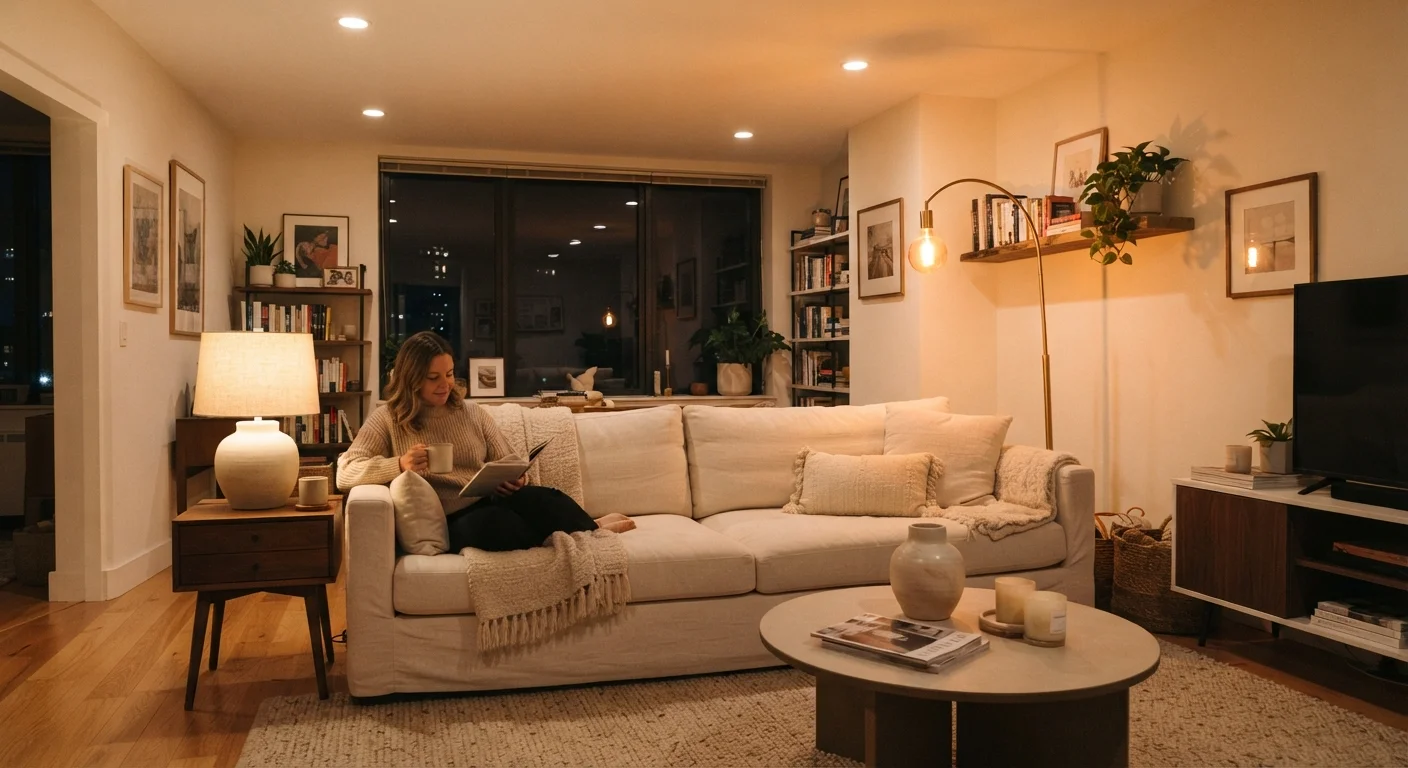
- Aim for layered lighting at 2700K–3000K. A mix of floor lamps, table lamps, and dimmer-controlled overhead fixtures gives you flexibility from movie nights to reading sessions.
- Kitchen
- Prioritize task lighting at 3000K–4000K. Under-cabinet strips illuminate prep surfaces directly. Overhead recessed lights should be bright — at least 70–80 lumens per square foot in work zones.
- Bedroom
- Warm light (2700K) from bedside lamps and soft overheads supports wind-down routines. If you have a reading nook or vanity area, add a dedicated higher-lumen source there rather than brightening the whole room.
- Bathroom
- Vanity lighting is critical for grooming accuracy. Aim for 3000K–3500K at high CRI (90+) positioned at face level on the sides of the mirror, not above it. Overhead-only bathroom lighting commonly creates unflattering shadows.
- Home Office
- Cooler, brighter light (4000K–5000K) supports alertness and reduces eye strain during long work sessions. Supplement with a desk lamp to reduce glare on screens.
- Garage / Utility Spaces
- Prioritize high lumen output and cool daylight tones (5000K) for visibility. Color accuracy matters less here than raw brightness.
For a full inventory of functional home essentials by room, see the room-by-room essentials inventory.
Dimmable Bulbs Require Compatible Switches
If you plan to use dimmer switches — a common choice for living rooms and bedrooms — make sure the bulbs you purchase are explicitly labeled as dimmable. Standard LED bulbs used with dimmer switches may flicker, hum, or fail prematurely. Dimmable LED bulbs exist across all color temperature and lumen ranges, so you don't have to sacrifice light quality to get this functionality.
Reading a Bulb Label Confidently
Since 2011, the FTC has required a standardized Lighting Facts label on most bulb packaging — similar in concept to a Nutrition Facts panel on food. Here's what to look for:
- Brightness (Lumens): The primary number to compare across bulbs.
- Estimated Yearly Energy Cost: Based on standard usage assumptions; useful for comparing running costs. For a deeper look at how home devices affect your electricity bill, see what your devices actually cost to run.
- Life Expectancy: Stated in hours. LED bulbs typically range from 15,000 to 25,000 hours — far beyond incandescent lifespans.
- Light Appearance (Kelvin): Shown on a warm-to-cool spectrum bar.
- Energy Used (Watts): Useful for fixture compatibility, not brightness comparison.
- Contains Mercury: Relevant only for CFL bulbs.
Paying attention to CRI is also worthwhile. While not always displayed prominently, a CRI of 90 or above means colors in your home will look truer and more vibrant — worth the extra care in spaces where appearance matters.
Check Fixture Maximums Before Buying
Every light fixture has a maximum wattage rating printed inside the socket housing. Exceeding this limit with any bulb type — incandescent or LED — creates a fire and safety hazard. Because LEDs draw far fewer watts than incandescents, they are almost always safe within residential fixture limits, but always verify before installing any bulb.
If you're weighing whether to invest in smart or premium bulbs versus standard options, the guide to where spending more pays off offers a useful framework for that decision.