
Before You Unpack: Set a Spending Framework
Moving costs hit all at once — closing costs, utility deposits, moving services, and then the immediate pressure to fill rooms. Without a clear plan, it's easy to spend heavily on things you don't need while missing items that would make daily life work. The foundation isn't a shopping list; it's a spending framework.
Start by separating your budget into three tiers: immediate needs (items required to eat, sleep, and stay clean on night one), first-month needs (items that make the home functional but can wait a week or two), and later additions (everything else). See our plain-English budgeting guide for a practical framework before you spend a dollar on furnishings.
Also confirm your homeowners insurance is in place before belongings arrive. If you're still getting oriented, this walkthrough of a standard homeowners policy clarifies what protection you're actually paying for.
List Before You Shop
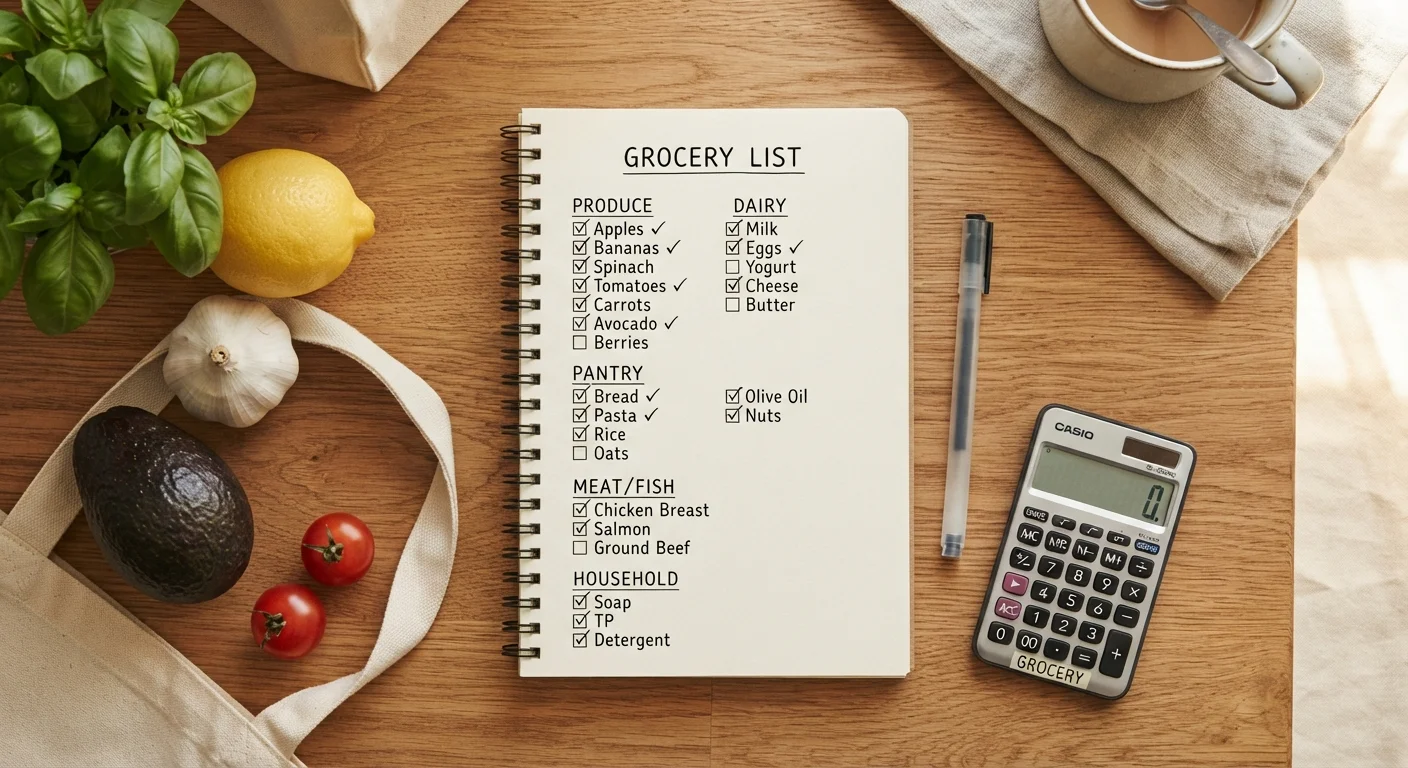
Write out every item you think you need for a room before opening any shopping app or walking into a store. Then mark each item as 'need on day one,' 'need within two weeks,' or 'want eventually.' This simple exercise eliminates most impulse purchases and keeps your first-month spending purposeful.
Kitchen Essentials
The kitchen is where first-time homeowners tend to overbuy. Novelty appliances and full matching sets fill carts quickly — and cupboards permanently. Instead, think in terms of cooking tasks, not gadgets.
The Non-Negotiables
- Chef's knife and cutting board — one quality knife outperforms a block of mediocre ones
- 10- or 12-inch skillet and a medium saucepan — covers the majority of stovetop cooking
- Stockpot — for pasta, soups, and batch cooking
- Baking sheet — roasts, sheet-pan dinners, and reheating
- Basic utensil set: spatula, wooden spoon, ladle, tongs
- Colander, mixing bowls, and airtight storage containers
Appliances Worth Prioritizing
A coffee maker (if relevant to your routine), a microwave, and a toaster or toaster oven handle a wide range of daily tasks without taking over counter space. A stand mixer, a bread machine, an air fryer — those belong on the later list unless you cook with them regularly already.
Essential vs. discretionary item
An essential is something you need to perform a basic daily function — cooking, sleeping, cleaning. A discretionary item improves comfort or aesthetics but isn't required for the home to work.
First-month budget
The spending limit you set specifically for the period immediately after moving in, covering only items needed to make the home livable in the short term.
Utility spaces
Areas like laundry rooms, garages, and storage closets that house tools, cleaning equipment, and functional household items rather than living or sleeping areas.
Batch cooking
Preparing larger quantities of food at once so meals are available throughout the week, reducing the need to cook from scratch daily. Useful when you're still settling in.
Carbon monoxide (CO) detector
A safety device that alerts occupants when carbon monoxide gas — which is colorless and odorless — reaches a dangerous level in the home. Required by law in many states.
Bedroom and Bathroom Basics
Poor sleep in the first weeks of homeownership is common and avoidable. Prioritize getting your bedroom functional before anything else in the home is decorated or furnished.
Bedroom
- Bed frame and mattress suited to your sleep style
- Two sets of sheets (so laundry day doesn't derail you), at least one pillow per person, and a duvet or comforter
- Blackout curtains or a temporary window covering — worth doing immediately in rooms that get early morning light
- Adequate lighting: a bedside lamp or overhead fixture with a bulb that supports winding down (warm, lower-lumen output). See our guide on matching bulbs to each room for specifics.
Bathroom
Beyond personal hygiene products, stock the bathroom with: a bath mat, two sets of towels per person, a shower curtain and liner if needed, a toilet brush, and a basic medicine cabinet with a first aid kit. A plunger belongs here from day one — don't learn that lesson the hard way.
Don't Skip the Smoke and CO Detectors
Before you focus on anything decorative, verify that working smoke detectors and carbon monoxide detectors are installed on every level of your home. Many jurisdictions legally require them, and their presence at move-in should be confirmed — not assumed. Replace batteries immediately if you're unsure when they were last changed.
Living Areas and Utility Spaces
Living rooms tempt people into large, expensive purchases early. Seating and a surface for day-to-day use are genuinely needed; a full furniture suite is not. Buy a functional sofa and a coffee table or side table, then live in the space for a month before committing to additional pieces.
If you plan to mount a TV, do some planning before drilling into walls. This room-by-room TV mounting checklist covers wall types, viewing height, and cable routing. For those considering connected devices, this plain-English intro to smart home setup helps you start without overcomplicating things.
Utility and Storage Areas
Every home needs a functional toolkit before anything breaks — because something always breaks early. At minimum: a hammer, screwdrivers (flathead and Phillips), a drill with basic bits, a tape measure, a level, and pliers. Add cleaning supplies — mop, broom and dustpan, vacuum, all-purpose cleaner — and you're equipped for the first few months of ownership.
For a deeper room-by-room inventory checklist, this functional setup guide is a useful companion to this article.
What to Skip Until Later
The items that don't belong in your first-month budget are the ones that feel essential in a showroom but aren't: decorative throws and accent pillows, a full dining set (a small table and chairs is enough), specialty kitchen appliances, wall art, room dividers, and any furniture that's purely aesthetic.
Guest room furniture can wait until you actually have guests. A home office can be minimal until you understand how you use the space. Smart home ecosystems, while useful, are easier to set up once you've settled into the home's rhythms. See this stage-by-stage home essentials reference for a longer-term view of what to add and when.
The most reliable approach: live in each room for two to four weeks before making significant purchases for it. You'll discover what you actually use, what the space actually needs, and what you would have regretted buying immediately.
Your Home Will Evolve — That's Normal
First-time homeowners often feel pressure to have everything figured out quickly. In reality, most long-term homeowners gradually refine their spaces over years, not weeks. Buying fewer items with more intention leads to a home that genuinely fits your life, rather than one that looks assembled all at once.