Where the Price Difference Actually Comes From
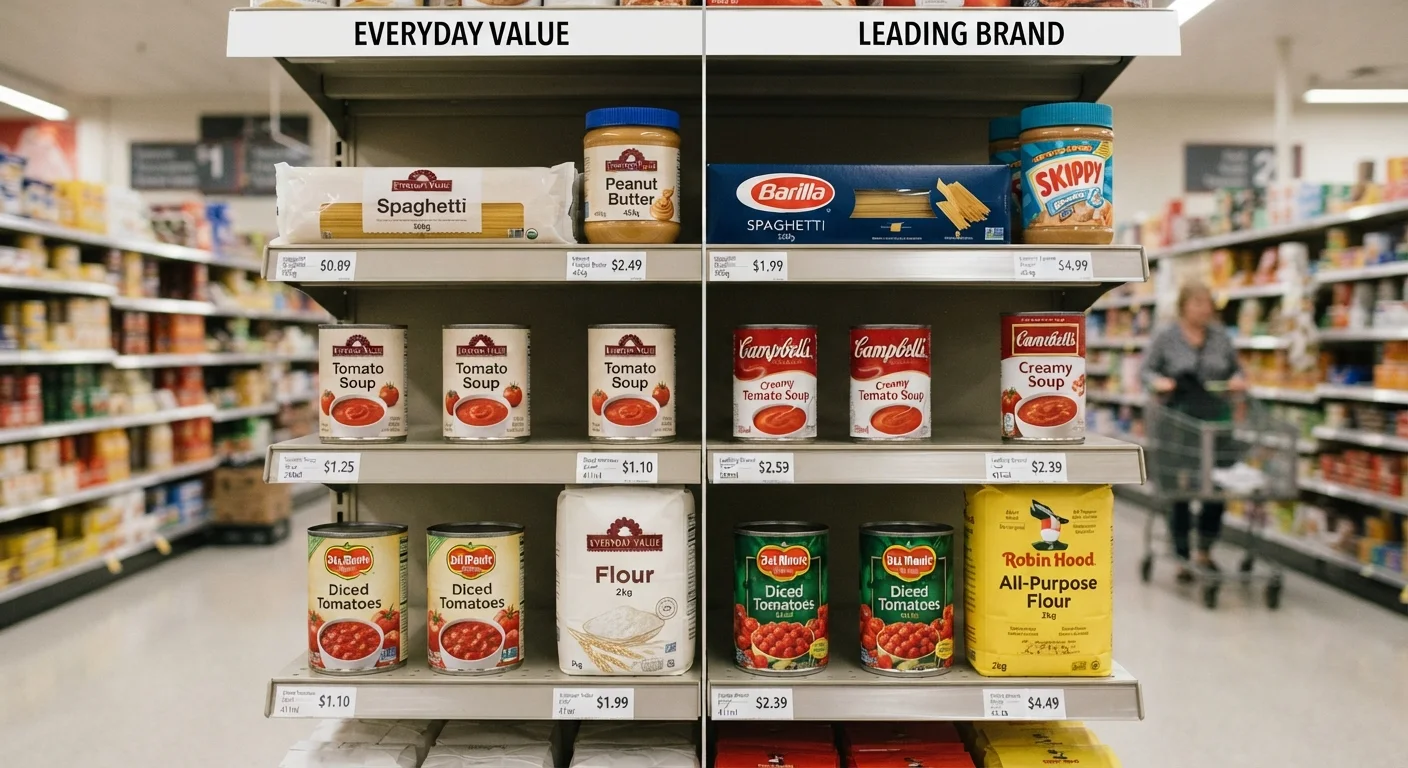
Walk down any grocery aisle and you'll notice the store-brand version of nearly every product costs noticeably less — sometimes 20%, sometimes 40% less. That gap rarely reflects a proportional difference in what's inside the package.
Name brands carry costs that have nothing to do with product quality: national advertising campaigns, slotting fees paid to retailers for shelf placement, premium packaging design, and years of brand-building investment. When you buy a name brand, a meaningful portion of what you pay covers those expenses. Store brands — also called private-label products — skip most of that overhead. Retailers contract with manufacturers (sometimes the very same factories producing name-brand goods) to produce products under the store's own label, passing the savings to the consumer.
This doesn't mean store brands are always equivalent. But understanding where the cost difference originates helps you evaluate whether you're paying for real quality or just familiarity. For a broader look at how price and value diverge, see The Real Difference Between Price and Value in Everyday Shopping.
| Criterion | Store Brand | Name Brand |
|---|---|---|
| Typical price point | 10–40% lower on average | Higher; includes marketing overhead |
| Manufacturing source | Often same factories as name brands | Proprietary facilities or co-manufacturers |
| Ingredient transparency | Comparable labeling requirements | Comparable labeling requirements |
| OTC drug equivalence | FDA-mandated active ingredient parity | Sets the reference standard |
| Brand recognition & trust | Lower; retailer-dependent reputation | High; decades of consumer familiarity |
| Availability | Retailer-specific; not universal | Widely available across retailers |
| Proprietary formulations | Rarely includes patented formulas | May include unique or patented ingredients |
Categories Where Store Brands Hold Up Well
Certain product categories show minimal meaningful difference between store and name brands, making the lower-priced option a straightforward choice for most households.
- Over-the-counter medications: The FDA requires generic OTC drugs to contain the same active ingredient at the same concentration as name-brand equivalents. Ibuprofen is ibuprofen, regardless of the label.
- Pantry staples: Canned tomatoes, dried beans, flour, sugar, and similar commodities are governed more by agricultural standards than brand processes. Ingredient panels on these items are usually identical.
- Cleaning products: Many store-brand cleaners use the same chemical compounds as national brands. Comparing active ingredient percentages on the label is more useful than comparing packaging.
- Paper goods and storage bags: Performance differences are marginal for most everyday uses, and store-brand options typically meet the same basic functional requirements.
~25%
Average price savings on store-brand groceries
Consumer research has consistently found store-brand grocery products priced roughly 20–30% lower than name-brand equivalents on average.
~40%
U.S. grocery sales attributable to private label
Private-label products have grown to represent a substantial share of total U.S. grocery unit sales, reflecting broad consumer acceptance.
Same active ingredient
OTC generic drug standard
The FDA requires over-the-counter generic drugs to contain the same active ingredient at the same strength as their name-brand counterparts.
For a category-by-category breakdown of where gaps are real and where they simply aren't, Store Brands vs. Name Brands: Where the Gap Is Real and Where It Isn't offers a more detailed look.
When the Name Brand Genuinely Matters
The store-brand advantage isn't universal. There are product categories where the quality or safety gap is real enough to warrant closer scrutiny.
- Specialty or artisan foods: Imported cheeses, small-batch condiments, and regionally sourced items may rely on specific sourcing or aging processes that store-brand versions don't replicate.
- Infant formula: While store-brand formulas must meet federal nutritional standards, parents should consult a pediatrician before switching, given the stakes involved.
- Electronics and appliances: Store-brand or house-label electronics often lack the component warranties, software support, and quality-control infrastructure of established manufacturers.
- Prescription medications vs. OTC generics: Generic prescription drugs follow FDA bioequivalence standards, but if your physician recommends a specific formulation, that guidance takes priority over cost considerations.
A Note on Infant and Medical Products
For products used by infants, young children, or people managing specific health conditions, decisions about store-brand versus name-brand options carry higher stakes. While regulatory standards apply to both, individual circumstances vary. Always consult a qualified healthcare professional before switching products in these categories — general editorial guidance is not a substitute for personalized medical advice.
For household categories where spending more tends to genuinely pay off, Home Essentials on a Budget: Where Spending More Actually Pays Off offers practical guidance on where to draw that line.
How to Evaluate Quality Without Relying on the Label
Brand perception is a powerful but unreliable shortcut. A more grounded approach focuses on verifiable product information rather than packaging cues.
- Compare ingredient lists: For food and personal care products, ingredients are listed in descending order by weight. If the first five ingredients are identical, meaningful quality differences are unlikely.
- Check active ingredient concentrations: For cleaning products and OTC medications, the active ingredient percentage tells you more than the brand name does.
- Look for third-party certifications: Certifications from independent bodies (rather than the brand itself) signal that claims have been externally verified.
- Use return policies as a safety net: Most major retailers accept returns on store-brand household products. Testing a store brand at low risk is straightforward.
- Consult independent testing summaries: Several nonprofit consumer organizations publish comparison testing across product categories — these assessments are based on lab performance, not brand reputation.
Smart shopping in this space is ultimately about allocating scrutiny where it matters. For more on what independent testing and consumer data reveal, Store Brand vs. Name Brand: What the Research Actually Shows is worth reading alongside this guide.