How Each Path Works
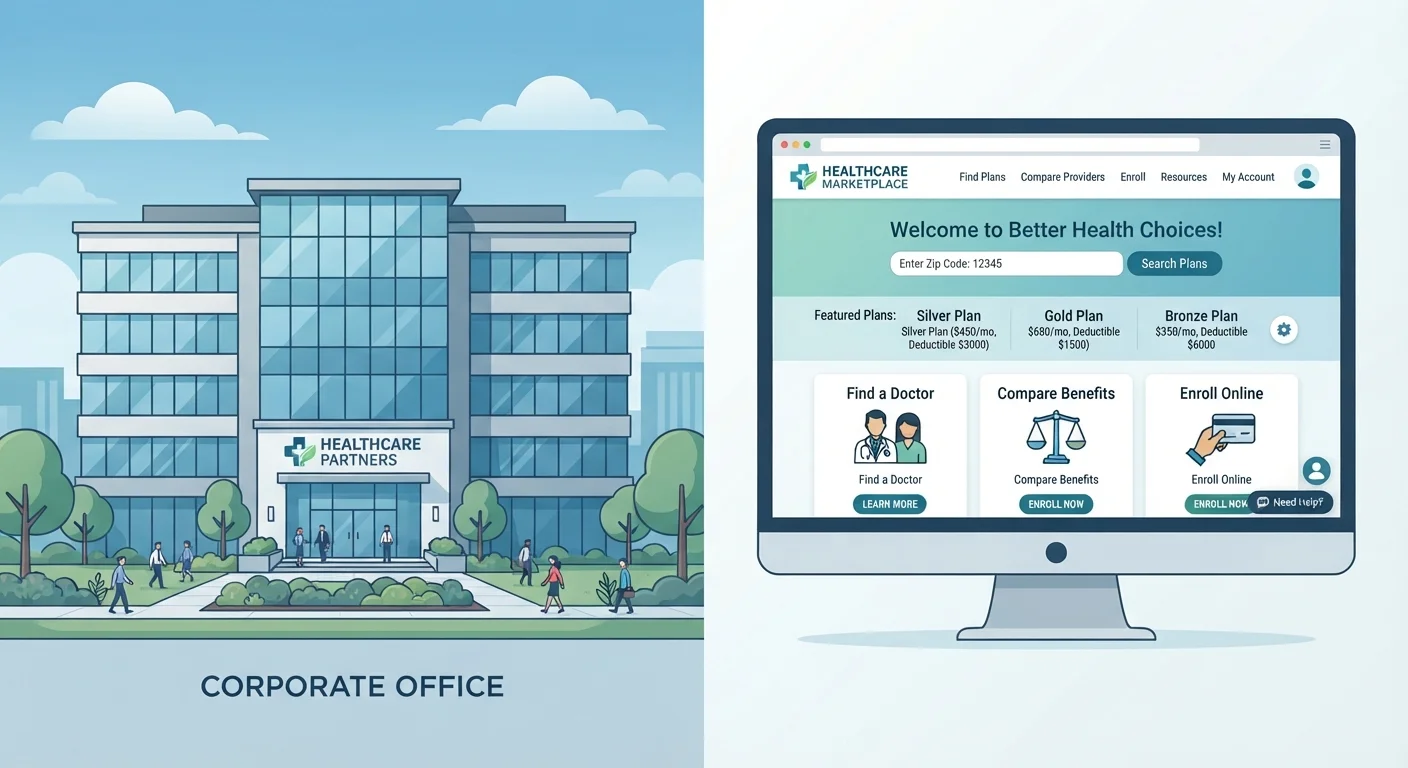
Health insurance in the U.S. reaches most people through one of two channels: a plan offered by an employer, or a plan purchased through the Affordable Care Act (ACA) Marketplace — sometimes called the Exchange. Understanding the structural differences between them helps you evaluate what you're actually getting.
Employer-sponsored coverage is arranged by your employer, who selects a carrier and plan (or a limited menu of plans) and negotiates group rates. You enroll during your company's open enrollment window, and premiums are typically deducted pre-tax from your paycheck. According to the Kaiser Family Foundation's annual Employer Health Benefits Survey, employers have historically covered roughly 70–80% of single-coverage premiums — a substantial subsidy that doesn't show up on your pay stub but directly reduces your cost.
Marketplace coverage operates through federally or state-run exchanges where individuals and families shop for ACA-compliant plans directly. Plans are organized into metal tiers (Bronze, Silver, Gold, Platinum) based on how costs are split between you and the insurer. You pay the full premium yourself unless you qualify for a premium tax credit, which is based on your household income and family size.
For a deeper look at how these enrollment channels fit into the broader landscape — including Medicaid — see our guide to enrollment pathways.
Cost Structures: What You Actually Pay
Cost is where the two paths diverge most sharply — but the comparison isn't always straightforward.
| Employer-Sponsored | ACA Marketplace | |
|---|---|---|
| Who pays the premium | Employer + employee share | Employee pays full amount (minus any tax credit) |
| Pre-tax premium payments | Yes, typically via payroll deduction | No (credits applied separately) |
| Income-based subsidies | Not available | Premium tax credits and CSRs may apply |
| Plan choice | Limited to employer's menu | Broad selection across metal tiers |
| Portability | Ends with employment (COBRA option exists) | Fully portable, job-independent |
| Enrollment timing | Employer-set open enrollment window | Federal/state Marketplace window + SEPs |
With employer coverage, your premium contribution is deducted pre-tax, which lowers your taxable income. That tax advantage can be meaningful, particularly for higher earners. However, your employer decides the plan options; you can't shop outside that menu.
On the Marketplace, premium tax credits (formally, the Advanced Premium Tax Credit, or APTC) can significantly reduce monthly costs for eligible households. Eligibility phases out as income rises, and — critically — you generally cannot claim the APTC if your employer offers a plan that meets the ACA's affordability threshold (currently defined as the employee-only premium costing no more than a set percentage of household income, adjusted annually by the IRS). Cost-sharing reductions (CSRs) on Silver plans can further lower deductibles and copays for lower-income enrollees.
Check the Affordability Test Before Switching
If your employer offers coverage, the IRS applies an affordability test each year to determine whether you can claim premium tax credits on the Marketplace instead. Even if your employer's plan feels expensive, you may still be ineligible for subsidies if the plan clears the affordability threshold. Calculate both scenarios — job-based cost after tax savings vs. Marketplace cost after any credits — before making a decision.
Flexibility, Portability, and Enrollment Windows
One practical disadvantage of employer coverage is that it's tied to your job. If you leave, are laid off, or your employer stops offering coverage, you lose access — though federal COBRA rules allow temporary continuation at your own expense, which is often expensive. That qualifying event also opens a 60-day Special Enrollment Period (SEP) on the Marketplace, letting you transition without waiting for annual open enrollment.
Marketplace plans, by contrast, are yours regardless of employment status. That portability matters for freelancers, gig workers, and anyone whose career path involves frequent job changes. The trade-off is that you bear more administrative responsibility — shopping, enrolling, and managing tax credit reconciliation at tax time.
Both paths share an annual open enrollment cycle, though the specific windows differ. Employer plans set their own enrollment dates; the federal Marketplace typically runs its open enrollment period in the fall for coverage beginning January 1. See our open enrollment overview for details on timing and what to prepare.
It's also worth noting that the dynamics of employer-sponsored benefits extend beyond health insurance. If you're evaluating your total benefits package, comparing group life insurance to individual policies follows similar logic — convenience vs. ownership and portability.
Which Path Makes Sense for You?
Neither option is universally superior. Several factors genuinely shift the math:
- Your employer's contribution rate: A generous employer subsidy is hard to replicate on the Marketplace without substantial tax credits.
- Your household income: If your income qualifies you for significant APTCs and your employer's plan is unaffordable or nonexistent, the Marketplace may cost less overall.
- Your family composition: Employer plans price dependent coverage differently than the Marketplace does. Run the numbers for your specific family size.
- Plan network and benefits: Compare the actual provider networks and covered services, not just premiums. A lower premium means little if your preferred doctors are out-of-network.
When you're ready to compare specific plans side by side, our step-by-step open enrollment walkthrough covers what to evaluate beyond the monthly premium.
~54%
Americans covered by employer-sponsored insurance
The Kaiser Family Foundation estimates roughly half of all Americans receive health coverage through an employer-sponsored plan.
~4 in 5
Marketplace enrollees receiving premium tax credits
CMS data has consistently shown that the large majority of ACA Marketplace plan selections are made with the help of premium tax credits.
This article is for general informational purposes only and does not constitute personalized insurance, financial, or legal advice. Coverage terms, subsidy eligibility, and regulations vary by provider, plan, and state. Consult a licensed insurance agent or adviser for guidance specific to your situation.