
What Health Insurance Actually Does
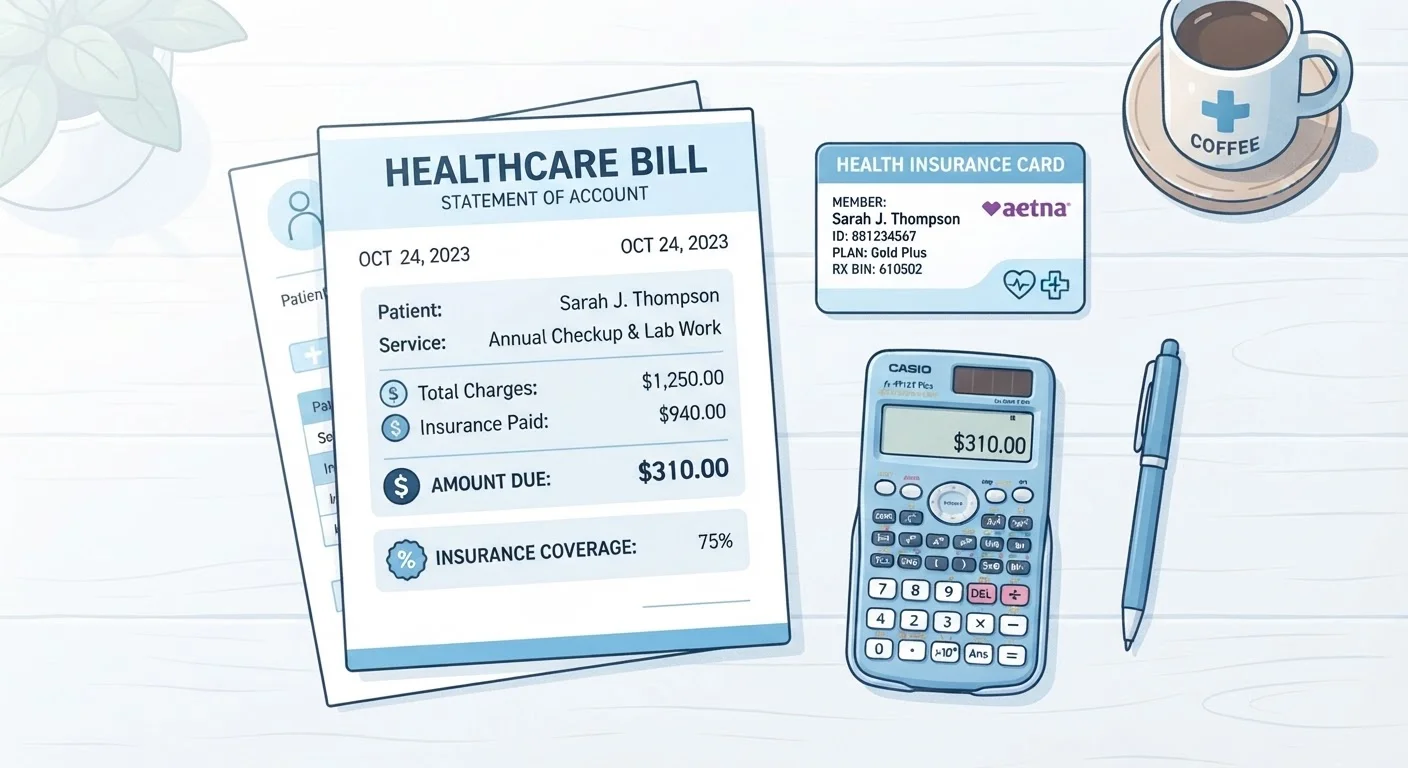
Health insurance is a contract: you pay a regular fee, and in return, the insurer agrees to share the cost of covered medical services. That's the core idea. Without it, every doctor visit, lab test, or hospital stay is billed to you at full price — which can be financially devastating for anything beyond routine care.
The insurance company pools premiums from many people to pay the claims of the few who need expensive care in any given year. You benefit from that pool even when you're healthy, because you're protected against costs that could otherwise wipe out your savings.
For a deeper look at how the whole system fits together, see The Complete Picture of How American Health Insurance Works.
Premium
The monthly fee you pay to maintain your health insurance plan, regardless of whether you use any medical services.
Deductible
The amount you must pay out of pocket for covered services each plan year before your insurer starts sharing costs with you.
Copay
A fixed dollar amount you pay at the time of a medical visit or when picking up a prescription, such as $25 for a doctor's appointment.
Coinsurance
The percentage of costs you share with your insurer after meeting your deductible — for example, you pay 20% and your insurer pays 80%.
Out-of-Pocket Maximum
The most you'll pay for covered in-network services in a single plan year. After reaching this cap, your insurer pays 100% of covered costs.
Network
The group of doctors, hospitals, and facilities that have contracts with your insurer to provide services at pre-negotiated, lower rates.
Health Savings Account (HSA)
A tax-advantaged account available with certain high-deductible plans that lets you save pre-tax money for qualified medical expenses.
The Costs You Pay: Premiums, Deductibles, and More
Health insurance isn't a single payment — it's a layered cost structure. Understanding each layer helps you budget accurately and avoid surprises.
- Premium: Your monthly payment to keep the plan active, due whether or not you use any care.
- Deductible: The amount you pay out of pocket each plan year before the insurer begins sharing costs. A $2,000 deductible means you pay the first $2,000 of covered services yourself.
- Copay: A flat fee you pay at the time of a visit (e.g., $30 to see your primary care doctor), separate from your deductible on many plans.
- Coinsurance: After meeting your deductible, you and the insurer split costs by percentage. A plan with 80/20 coinsurance means the insurer pays 80% and you pay 20%.
- Out-of-pocket maximum: The annual cap on what you pay. Once reached, your insurer covers 100% of covered in-network costs for the rest of the plan year.
Match Your Plan to Your Expected Needs
Think about how often you typically see doctors or use prescription drugs before choosing between a low-premium/high-deductible plan and a higher-premium plan with richer benefits. If you're generally healthy and rarely need care, a higher deductible may cost less overall. If you have ongoing medical needs, lower cost-sharing may be worth the higher premium.
Plans with lower premiums often have higher deductibles, and vice versa. Neither is automatically better — it depends on how much care you expect to use.
Plan Types: HMO, PPO, EPO, and HDHP Explained
The plan type shapes your everyday experience — which doctors you can see, whether you need referrals, and how costs are structured.
- HMO (Health Maintenance Organization)
- Requires you to select a primary care physician (PCP) who coordinates your care and provides referrals to specialists. Generally limited to in-network providers except in emergencies. Usually lower premiums.
- PPO (Preferred Provider Organization)
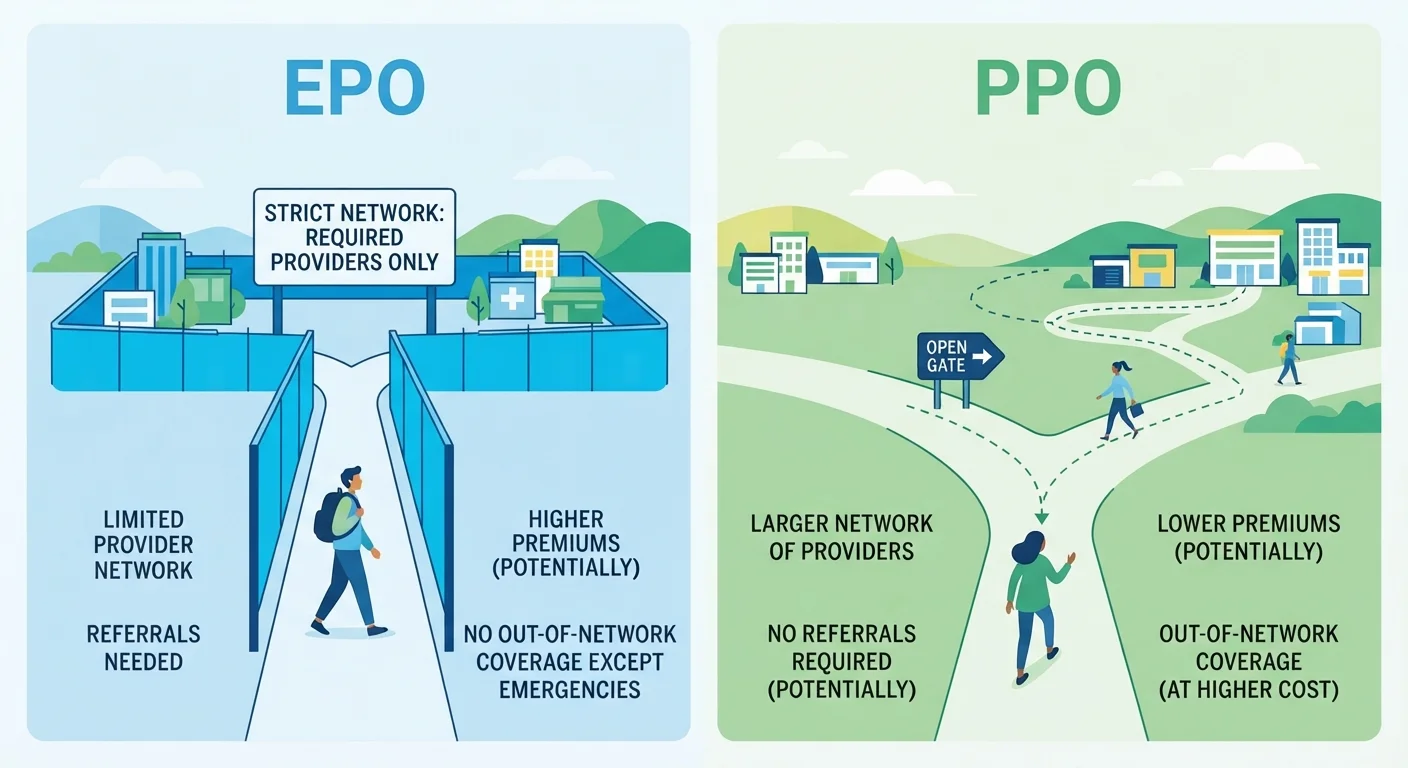
- More flexibility — no referral needed to see a specialist, and out-of-network care is covered (at a higher cost). Typically higher premiums than HMOs.
- EPO (Exclusive Provider Organization)
- Like a PPO in that you don't need referrals, but like an HMO in that out-of-network care is generally not covered at all except in emergencies.
- HDHP (High-Deductible Health Plan)
- Lower premiums paired with a higher deductible. Often paired with a Health Savings Account (HSA), which lets you set aside pre-tax dollars for medical expenses.
If you want a more in-depth look before enrolling, Health Insurance Decoded walks through each plan type step by step.
Networks, Coverage, and What Gets Left Out
Every health plan has a network — a set of hospitals, doctors, and other providers that have agreed to negotiated rates with your insurer. Staying in-network almost always means lower costs for you.
Out-of-Network Care Can Be Costly
Seeing a provider outside your plan's network can result in significantly higher bills — or no coverage at all, depending on your plan type. Before any non-emergency appointment, confirm that the provider participates in your specific network. Even a hospital that is in-network may have out-of-network physicians on staff, such as anesthesiologists or radiologists.
Coverage describes which services your plan pays for. Most plans cover essential health benefits — a set of ten service categories required under federal law, including preventive care, emergency services, prescription drugs, and mental health treatment. But not everything is covered. Common exclusions include elective cosmetic procedures, certain dental and vision services (unless you have a separate plan), and experimental treatments.
Always read your plan's Summary of Benefits and Coverage (SBC) — a standardized two-page document insurers are required to provide — to understand exactly what is and isn't included. For a full glossary of terms you'll encounter in those documents, Health Insurance Glossary: 40 Terms Decoded is a useful reference to keep nearby.
How and When You Can Enroll
You generally can't sign up for health insurance whenever you want. There are specific windows that govern when enrollment is allowed.
- Open Enrollment Period (OEP): The annual window — typically in the fall for marketplace plans — when anyone can enroll or switch plans for the coming year.
- Special Enrollment Period (SEP): Triggered by a qualifying life event such as losing job-based coverage, getting married, having a child, or moving to a new coverage area. SEPs typically give you 60 days from the event to enroll.
- Employer enrollment: If you get coverage through a job, your employer sets its own enrollment window, usually when you first become eligible and annually thereafter.
- Medicaid and CHIP: These government programs have open enrollment year-round if you meet eligibility requirements based on income and family size.
Missing your enrollment window can leave you uninsured for months, so mark the dates in advance. This article is for general informational purposes only and is not a substitute for advice from a licensed insurance professional or navigator who can help with your specific situation.
This article provides general educational information about health insurance and is not personalized insurance, financial, or legal advice. Coverage, costs, and eligibility vary by plan, provider, and state. Always review actual policy documents and consult a licensed insurance agent or navigator for guidance specific to your circumstances.