The Lifespan Gap Is Real — and Significant
Studies consistently show that indoor cats live longer than outdoor or indoor-outdoor cats. Estimates from veterinary sources suggest indoor cats live an average of 12–18 years, while outdoor cats average closer to 2–5 years in some populations — though this figure varies widely depending on environment, urban density, and access to veterinary care. Even in lower-risk suburban settings, outdoor cats tend to have shorter lifespans.
The primary drivers of this gap are external hazards: vehicle strikes, animal attacks, exposure to toxins, infectious disease transmission from other animals, and injuries from falls or fights. These risks aren't speculative — they're the leading causes of emergency feline veterinary visits. Indoor cats aren't risk-free, but the ceiling on their exposure is much lower.
For a fuller picture of how a cat's health needs shift across their life, see our lifecycle wellness overview covering nutritional and care changes from kittenhood to senior years.
12–18 yrs
Typical indoor cat lifespan
Veterinary sources broadly estimate indoor cats outlive outdoor cats by a substantial margin, primarily due to hazard reduction.
~3x
Relative disease exposure risk
Outdoor cats have significantly higher rates of FeLV, FIV, and parasite infection compared to cats kept exclusively indoors.
What Outdoor Access Actually Provides
Outdoor environments offer cats something genuinely difficult to replicate indoors: complex, unpredictable sensory stimulation. Varied terrain, scent marking, prey hunting, and unscripted social encounters with other animals all engage a cat's instincts in ways that a living room, however well-furnished, simply cannot match.
Research in feline behavioral science suggests that cats deprived of species-appropriate outlets — stalking, chasing, pouncing, and exploring — are more likely to show signs of frustration or stress, including redirected aggression, over-grooming, or destructive behavior. This doesn't mean indoor cats are inherently unhappy, but it does mean their environment must actively compensate.
| Indoor Cats | Outdoor/Indoor-Outdoor Cats | |
|---|---|---|
| Average lifespan | 12–18 years (estimated) | 2–10 years depending on environment |
| Injury risk | Low (falls, household hazards) | High (traffic, predators, fights) |
| Infectious disease exposure | Minimal with vaccinations current | Elevated — FeLV, FIV, parasites |
| Behavioral stimulation | Requires deliberate enrichment | Naturally high; varied and unpredictable |
| Obesity risk | Higher without managed activity | Lower due to physical activity |
| Stress and boredom risk | Higher without environmental variety | Lower; environment self-enriching |
| Wildlife impact | None | Significant predation on birds and small animals |
Outdoor cats also face infectious disease exposure. Feline leukemia virus (FeLV), feline immunodeficiency virus (FIV), upper respiratory infections, and intestinal parasites are all significantly more common in cats with outdoor access. Routine vaccination and parasite prevention reduce — but don't eliminate — these risks.
Making Indoor Life Work: Enrichment Is Non-Negotiable
An indoor cat left without structured stimulation is not automatically better off than an outdoor cat — they're just at risk of different problems. Obesity, boredom-driven behavior issues, and anxiety are disproportionately common in under-stimulated indoor cats.
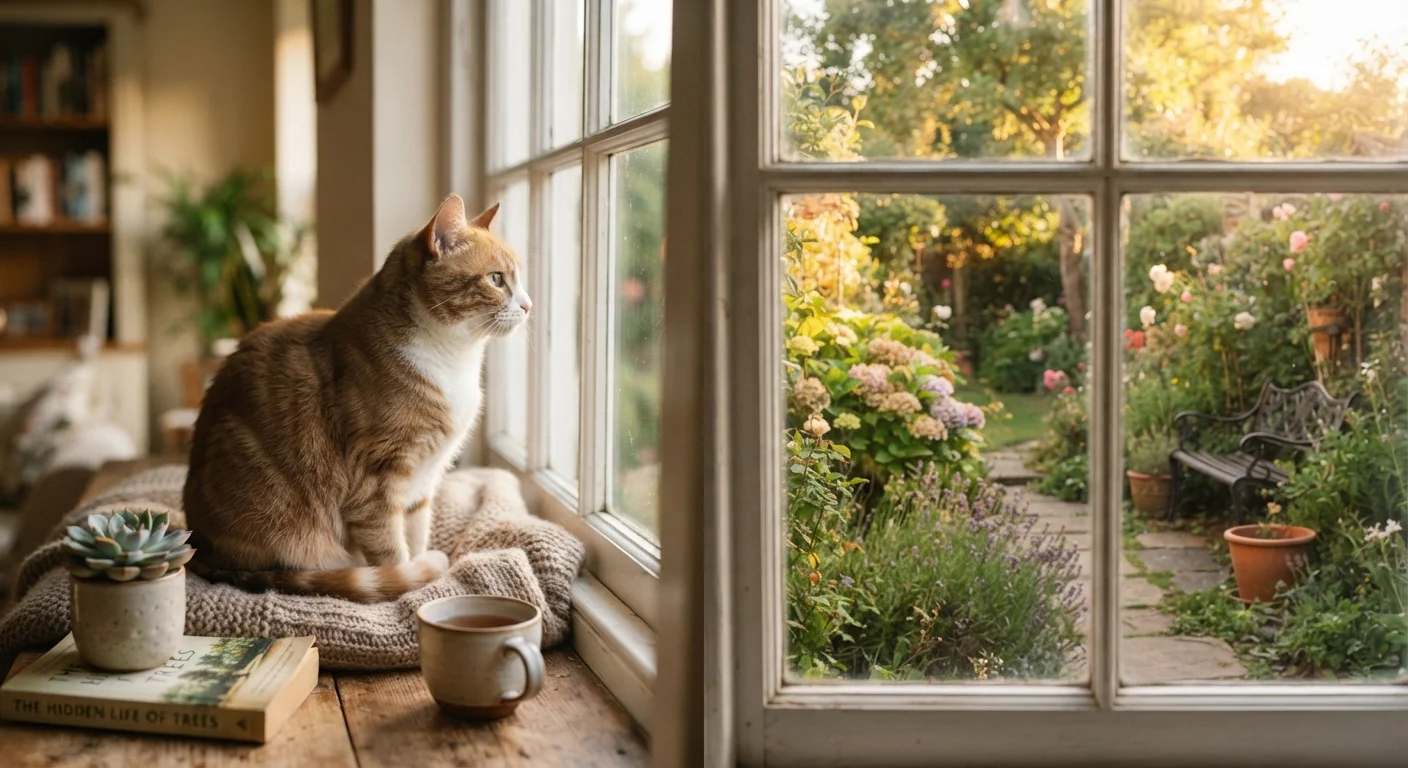
Effective indoor enrichment typically includes vertical space (cat trees, shelving), puzzle feeders to slow eating and engage problem-solving, rotating toys that mimic prey movement, window perches with outdoor sightlines, and regular interactive play sessions with their owner. Cats are crepuscular — most active at dawn and dusk — so timing play sessions accordingly tends to get better engagement.
Rotate Toys to Sustain Interest
Indoor cats habituate quickly to the same toys left out permanently. Rotating a selection — offering two or three items at a time and swapping them every few days — keeps novelty high and encourages continued engagement. Adding a small amount of catnip or a novel scent to a familiar toy can also temporarily reset interest.
For a structured approach to indoor enrichment, our indoor cat enrichment playbook covers evidence-backed strategies in detail. You can also find more on keeping indoor cats mentally stimulated to help prevent boredom-related behavioral problems.
The Middle Path: Supervised and Contained Outdoor Access
Many veterinary behaviorists advocate for what's sometimes called "controlled outdoor access" — giving cats exposure to the outdoor environment without free-roaming. Common approaches include catios (enclosed outdoor structures attached to or near the home), leash and harness training, and secured garden enclosures.
This approach meaningfully addresses the behavioral benefits of outdoor exposure while dramatically limiting the major hazards: traffic, disease transmission from roaming cats, and predator encounters. Not every cat adapts willingly to a harness or catio, and introduction should happen gradually and positively, particularly for adult cats without prior outdoor exposure.
If you're also navigating similar questions for a dog in your household, our article on indoor vs. outdoor lifestyle requirements for dogs explores the comparable trade-offs in canine care. For a deeper dive specifically into cat lifestyle trade-offs, see the real trade-offs of indoor vs. outdoor access for cats.
This article is for general informational purposes only and is not a substitute for personalized veterinary advice. Consult your veterinarian for guidance tailored to your cat's individual health, history, and circumstances.