Size, Appearance, and General Temperament
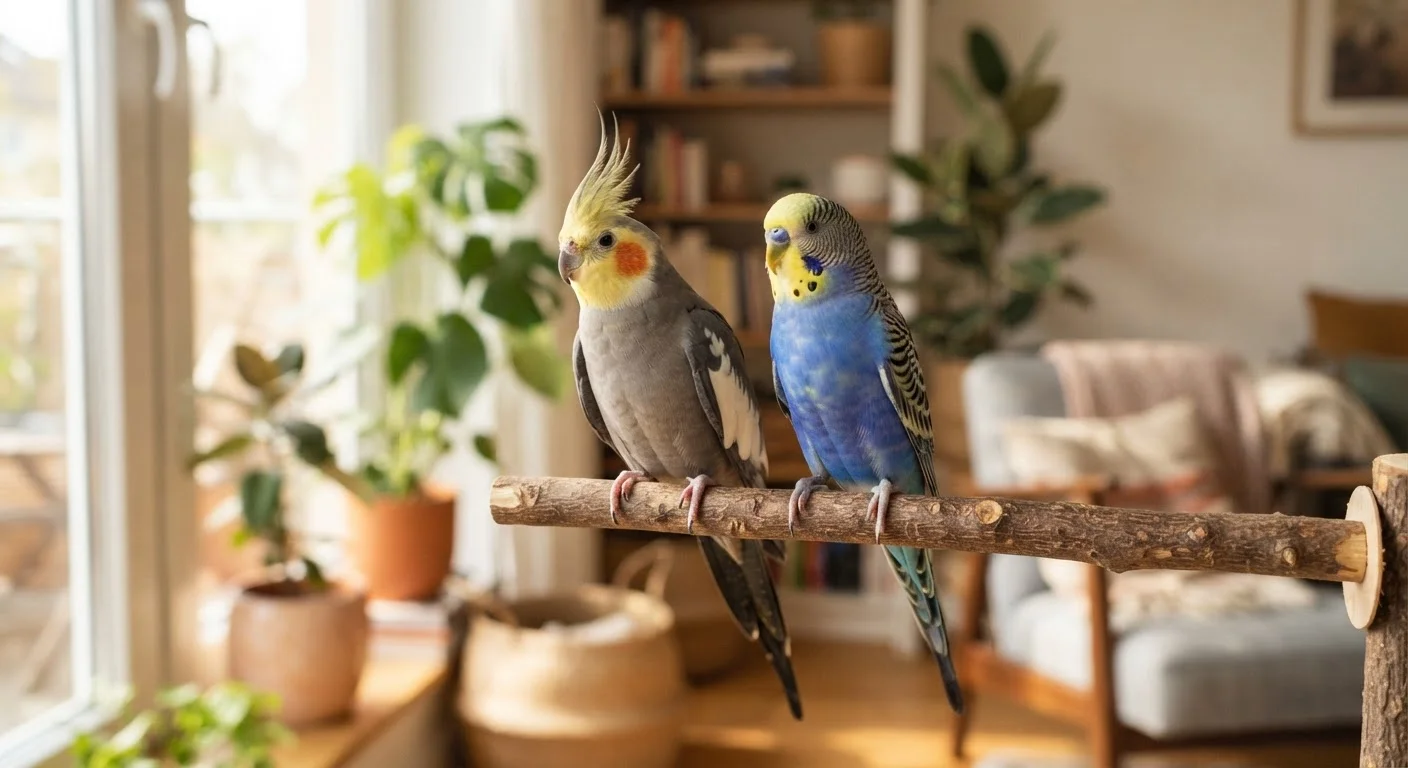
Parakeets — commonly called budgies (short for budgerigars) — are small, slender birds weighing roughly 1–1.4 ounces. They're energetic, curious, and can learn to mimic words, though their voices are soft and somewhat raspy. Cockatiels are noticeably larger, weighing around 3 ounces, and are immediately recognizable by their distinctive crested heads and orange cheek patches.
In terms of personality, cockatiels tend to be more overtly affectionate. Many enjoy being held, scratched on the head, and spending time perched on a shoulder. Parakeets can also become tame and hand-friendly with consistent, patient handling, but they're often more independent by nature and may prefer the company of another bird over constant human attention.
If you're also weighing other small pets for your household, the Hamster vs. Gerbil comparison is a useful reference for understanding how different species match different lifestyle needs.
| Parakeet (Budgie) | Cockatiel | |
|---|---|---|
| Average Size | ~1–1.4 oz, 7 inches | ~3 oz, 12–13 inches |
| Average Lifespan | 7–12 years | 15–20 years |
| Noise Level | Low to moderate chirping | Moderate to high; loud whistling |
| Affection / Bonding | Moderate; more independent | High; strongly bonds with owner |
| Talking Ability | Yes, soft and raspy voice | Whistles well; limited words |
| Social Needs | Moderate; pairs work well | High; needs daily interaction |
| Beginner Friendliness | Very good starter bird | Good, but more demanding |
| Space Requirements | Smaller cage acceptable | Larger cage recommended |
Noise Level and Living Space Compatibility
Noise is one of the most practical factors to weigh before choosing a bird. Parakeets produce chirps and chattering that most people find pleasant and easy to tune out — they're generally manageable in apartments or homes with close neighbors. Cockatiels, by contrast, are considerably louder. Males in particular are known for lengthy whistling sessions, especially in the morning. This isn't a flaw — it's natural communication — but it's worth factoring in if noise sensitivity is a concern in your household.
Consider Keeping a Pair
If your schedule means extended hours away from home, keeping two birds of the same species can significantly reduce stress-related behaviors. Two parakeets will socialize with each other throughout the day. Be aware that a bonded pair may become less focused on human interaction, so handle each bird individually from an early age.
Cockatiels may also whistle or call out when they feel isolated, which can become a behavioral issue if their social needs aren't consistently met. Parakeets kept in pairs tend to entertain each other and are less likely to develop attention-seeking vocalizations.
For a broader look at how budgies compare to other small bird species in home environments, see Small Bird Species for Indoor Keeping.
Lifespan, Health, and Veterinary Needs
Lifespan is a significant commitment consideration. Parakeets typically live 7–12 years with good care; cockatiels commonly reach 15–20 years, and some live even longer. Choosing a cockatiel means planning for nearly two decades of care — which includes regular avian veterinary checkups, not just emergency visits.
20 years
Maximum cockatiel lifespan with good care
Avian veterinary sources commonly cite 15–20 years as the expected range for well-cared-for cockatiels in captivity.
7–12 years
Typical parakeet lifespan in captivity
Parakeets living on nutritionally complete diets with routine veterinary care tend to reach the higher end of this range.
Both species are susceptible to respiratory infections, nutritional deficiencies, and feather problems. A diet based primarily on seeds — a common mistake — is nutritionally incomplete for both. Pellets, fresh vegetables, and limited fruit form a healthier foundation. Always consult an avian veterinarian for guidance on diet and any signs of illness; birds are known to mask symptoms until a condition is advanced.
Before bringing either species home, reviewing a readiness checklist can help ensure your setup is appropriate. The Before You Bring Home a Small Pet checklist covers habitat, vet access, and daily time commitment in practical detail.
Daily Care, Socialization, and Time Commitment
Both parakeets and cockatiels require daily out-of-cage time in a safe, supervised environment — a minimum of one to two hours is widely recommended by avian care specialists. Cages should be large enough for natural movement and enriched with perches of varying diameters, foraging toys, and opportunities for mental stimulation.
Cockatiels have a stronger need for direct human interaction. A cockatiel left alone for most of the day without enrichment or a companion bird may develop stress behaviors such as feather plucking or excessive calling. Parakeets, especially when kept in bonded pairs, are generally more self-sufficient during your working hours — though they still need daily engagement.
Grooming needs for both include periodic nail trims and, in some cases, wing trims (a decision best made in consultation with an avian vet). Neither species requires bathing in the traditional sense, though both enjoy light misting or a shallow dish of water for preening.
This article is for general informational purposes only and does not constitute veterinary advice. Always consult a licensed avian veterinarian for guidance specific to your bird's health and care needs.