Why Solitary Housing Is Harder on Guinea Pigs Than You Might Think
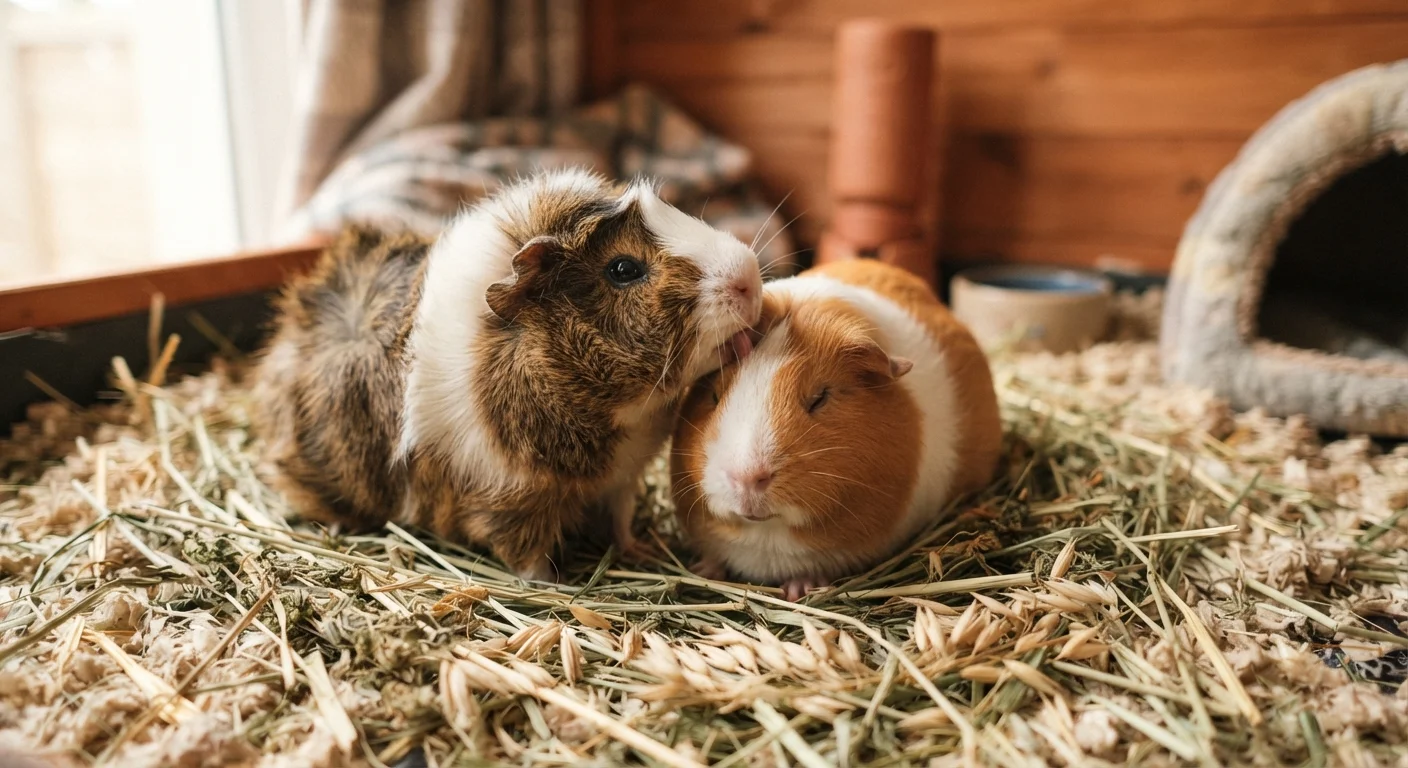
Guinea pigs are not naturally solitary animals. In the wild, Cavia porcellus lives in social groups where members communicate constantly through vocalizations, grooming, and physical proximity. This social wiring doesn't disappear in captivity — a guinea pig alone in a cage is still a herd animal without a herd.
The consequences of isolation are real and measurable. A lone guinea pig may become lethargic, stop exploring its enclosure, or develop repetitive behaviors like excessive self-grooming. Some stop eating well. Stress hormones remain chronically elevated in socially isolated guinea pigs, which can weaken the immune system over time. These aren't just behavioral quirks — they reflect genuine emotional and physiological strain.
Many owners underestimate this need because guinea pigs are small and quiet. But their size doesn't reduce their social requirements. If anything, their ability to mask illness and distress means problems can go unnoticed until they've worsened. See our guide to recognizing illness in small pets for signs that stress may be affecting your guinea pig's health.
2+
Minimum recommended group size for guinea pigs
Many veterinary and animal welfare organizations, including those in the UK and Switzerland, formally recommend or legally require guinea pigs to be housed in pairs or groups.
~65
Distinct vocalizations guinea pigs produce
Research into guinea pig communication has identified a wide range of vocalizations used for social bonding, alarm, and contact-calling — signals that require another guinea pig to receive and respond.
Choosing the Right Companion
Before making any introduction, choosing a compatible companion matters as much as the process itself. A few key considerations:
- Same-sex pairs are easiest to manage. Two females typically coexist peacefully. Two males can work well — especially if introduced young — but may need more space to reduce tension.
- Mixed-sex pairs require neutering. If you pair a male and female, one must be neutered to prevent breeding. Consult a veterinarian experienced with small animals before pursuing this route.
- Age gaps are generally fine. An adult paired with a younger guinea pig often bonds well. The difference in size and confidence tends to reduce direct competition.
- Personality matters too. Some shelters and rescues allow you to do a supervised meeting before adoption, sometimes called a "speed dating" session. This can give you a practical read on compatibility before committing.
Once you have a companion in mind, make sure your enclosure is appropriately sized for two animals. A properly set up enclosure with enough space, hiding spots, and resources for both pigs reduces competition and makes cohabitation far smoother.
Visit a rescue for a "speed dating" session
Many guinea pig rescues will let your existing pig meet potential companions in a supervised setting before adoption. This takes the guesswork out of compatibility and often leads to faster, smoother bonding. Ask your local small-animal rescue whether they offer this service.
How to Introduce Two Guinea Pigs Safely
Even well-matched guinea pigs need a careful introduction. Skipping steps or rushing the process is one of the most common reasons introductions fail.
Step 1: Quarantine the new pig first
Keep the new guinea pig in a separate enclosure — ideally in a different room — for at least one to two weeks. This protects your existing pet from any illness the newcomer may be carrying, even if they appear healthy.
Step 2: Allow adjacent housing
After quarantine, move the enclosures close enough that the guinea pigs can smell and hear each other without direct contact. This familiarization phase — typically a few days to a week — reduces the novelty factor when they finally meet face to face.
Step 3: Introduce on neutral territory
The first face-to-face meeting should happen somewhere neither pig considers its home — a playpen on the floor, a bathroom, or an area of the room not previously used by either pig. This eliminates territorial defensiveness, which is one of the primary causes of aggression.
Step 4: Supervise closely
Keep the first few sessions short (15–20 minutes) and watch carefully. Some chasing, rumblestrutting, and exploratory sniffing is normal and expected. Separate them only if you see persistent biting or one pig cornering the other with no escape. The full bonding process covers how to progress from short meetings to permanent cohabitation.
Step 5: Move in together with a cleaned enclosure
When both pigs seem relaxed around each other, clean the enclosure thoroughly to remove the existing pig's scent markings before moving them in together. Add a second set of resources — water, food bowls, hiding spots — so neither pig needs to compete.
For ongoing enrichment once they're settled in, our enrichment guide for small pets offers practical ideas suited to guinea pig pairs.
When introductions repeatedly fail
Some guinea pigs — particularly older boars or those with a history of isolation — may take significantly longer to accept a companion, or may not bond with a specific partner at all. If multiple introduction attempts result in serious aggression, consult a veterinarian or a small-animal behavior specialist before trying again. Forcing incompatible animals to cohabitate causes harm to both.
This article is for general informational purposes only and does not constitute veterinary advice. Always consult a qualified veterinarian for questions specific to your pet's health or behavior.