Why Most Starter Cages Fall Short
Many cages marketed for guinea pigs at pet retail stores are too small to support a healthy, active animal. Guinea pigs are not sedentary — they roam, forage, and interact throughout the day. Cramped quarters contribute to stress, obesity, and behavioral problems. Understanding what these animals actually need, before you buy anything, saves you from costly do-overs.
Unlike hamsters, which use vertical space and tunnels, guinea pigs are ground-level animals. They need wide, open floor area rather than stacked platforms. If you're comparing setups for different small pets, our guide to hamster habitats explains how the requirements differ significantly between species.
What you will need
What You'll Need Before You Start
Gathering all components before assembly prevents mid-setup scrambling and ensures your guinea pig moves into a finished, functional space from day one.
C&C Grid Cage or Large Coroplast Enclosure
Provides the minimum 7.5 sq ft floor space needed for one guinea pig; modular designs allow expansion for pairs.
Paper-Based or Fleece Bedding
Absorbs urine, controls odor, and keeps the cage floor comfortable without the respiratory risks of cedar or pine shavings.
Enclosed Hideout (at least one per pig)
Gives guinea pigs a secure retreat to reduce stress — open-topped hides do not provide the same sense of safety.
Hay Rack or Hay Station
Keeps unlimited timothy hay accessible and off the ground, preventing soiling and waste.
Drip-style Water Bottle or Heavy Ceramic Bowl
Provides constant access to fresh water without the tipping risk of lightweight bowls.
Food Dish (heavy ceramic)
Holds fresh vegetables and pellets in a stable container that resists tipping and is easy to clean.
Playpen or Puppy Pen for Floor Time
Extends exercise space outside the enclosure during supervised daily floor time, which should be at least one hour.
Step-by-Step: Building the Enclosure
Follow these steps in order. Rushing through placement or bedding depth are two of the most common first-timer mistakes — both are easy to avoid.
Choose and position the enclosure
Select a location that maintains a stable temperature between 65°F and 75°F, away from exterior walls, heating vents, air conditioning units, and windows with direct sun exposure. Guinea pigs are vulnerable to both heat stroke and drafts. Place the enclosure at a height where you can see inside easily — floor level makes monitoring difficult and can stress prey animals that can't see approaching movement.
Assemble the enclosure to the correct dimensions
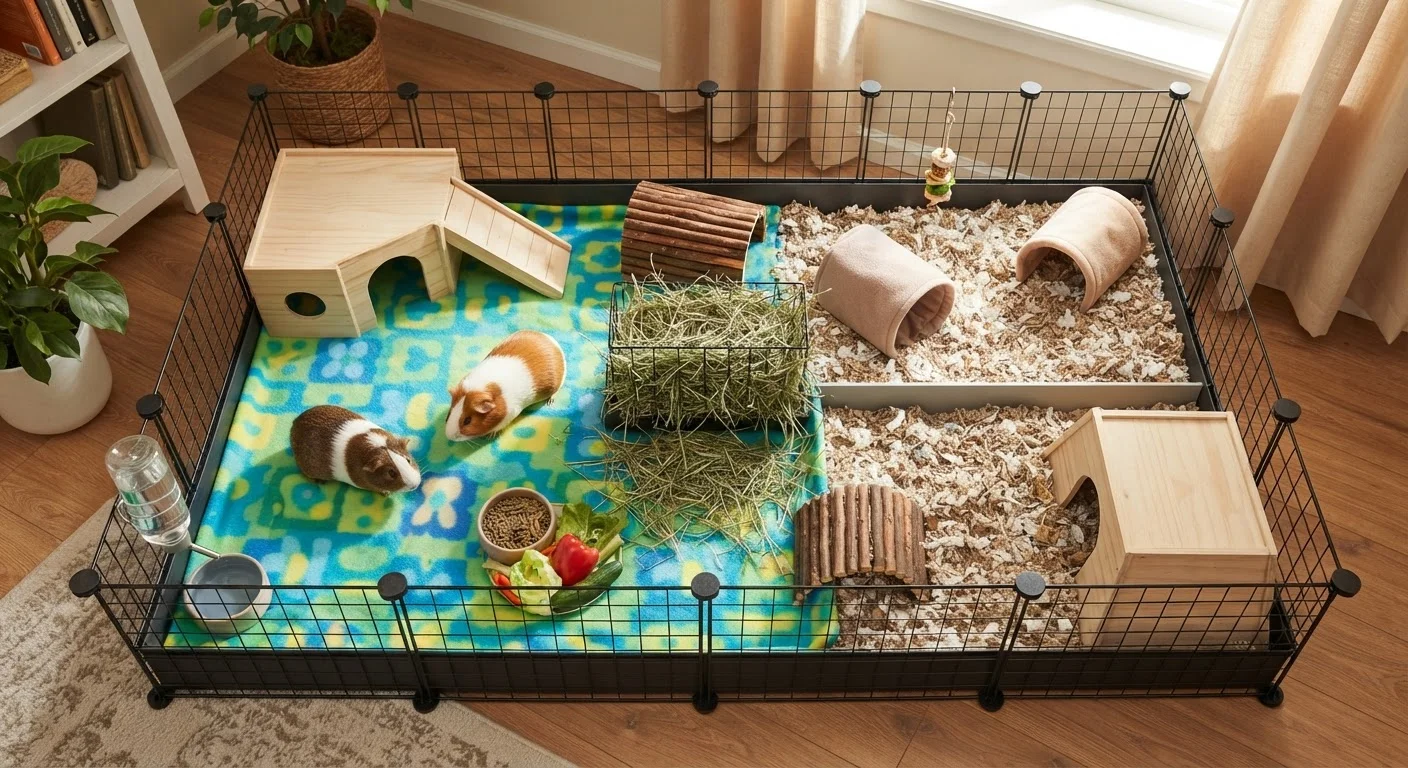
For one guinea pig, the enclosure floor should be at least 7.5 square feet — ideally 10+ square feet. For two pigs, aim for at least 10.5 square feet. Most commercially sold cages fall below this threshold. C&C (cubes and coroplast) cage systems allow custom sizing and are widely used by guinea pig owners for this reason. Ensure all walls are tall enough to prevent escape — at least 12 inches on open-top designs.
Add a 2–3 inch layer of appropriate bedding
Avoid cedar and pine shavings — aromatic wood products release phenols that can irritate guinea pig respiratory tracts. Use unscented paper-based bedding or fleece liners paired with an absorbent layer beneath. Lay bedding at a depth of at least 2 inches to allow some natural burrowing behavior and adequate moisture absorption. Change bedding fully at least once per week; do spot-cleaning of soiled areas daily.
Place hidouts, food, water, and hay
Position at least one enclosed hide per guinea pig on opposite ends of the enclosure — this reduces resource competition if you have more than one pig. Hang or mount the water bottle at an accessible height, and set the hay rack so hay is always available in unlimited quantity (hay should make up roughly 70–80% of a guinea pig's diet). Place the food dish away from the hay station to minimize contamination.
Do a final safety and airflow check
Check all enclosure connections and zip ties if using a grid system — guinea pigs press against walls and gaps can widen over time. Confirm there are no sharp edges on coroplast or wire. Ensure the enclosure area has passive airflow but is not directly in a draft path. Never fully seal a guinea pig's living area — they need fresh air circulation at all times, but not wind or cold air exposure.
Avoid Wire-Bottom Flooring
Wire or mesh flooring causes a painful condition called bumblefoot (pododermatitis) in guinea pigs, where the footpads become inflamed or infected from constant pressure on hard wire surfaces. Always use a solid-bottomed enclosure, and cover any wire sections with solid flooring material or fleece before your guinea pig moves in.
Enrichment, Companions, and What Comes Next
A properly built enclosure is the foundation, but it's only part of the picture. Guinea pigs are highly social animals that experience measurable stress when housed alone long-term. If you currently have one guinea pig, explore our companion guide for guinea pigs to understand what a second pig requires — and when you're ready to act, the step-by-step bonding process walks you through safe introductions.
Once the habitat is set up, enrichment keeps guinea pigs mentally active and reduces boredom-related behaviors like bar-chewing or pacing. Tunnels, foraging opportunities, and varied textures all help. Our enrichment ideas for small pets offers practical options suited to guinea pig behavior. For new owners, proper handling techniques are worth reviewing before you start daily interaction with your pig.
Build for Two From the Start
Even if you're starting with one guinea pig, sizing your enclosure for two from the beginning avoids a costly rebuild later. Guinea pigs thrive in pairs, and most experienced owners recommend adopting two from the outset. A well-sized enclosure now is a practical investment in your pig's long-term wellbeing.
This article is for general informational purposes only and does not substitute for advice from a qualified exotic animal veterinarian. If your guinea pig shows signs of illness or distress, consult a vet experienced with small animals.