
Why Two Routines Are Better Than One
Your skin has different needs at 7 a.m. than it does at 10 p.m. In the morning, you're preparing your face for environmental exposure — UV rays, pollution, and the friction of daily life. At night, you're clearing that buildup and letting your skin recover. Trying to handle both in a single session means you're either over-cleansing or under-protecting. Splitting into a morning and evening routine isn't extra work; it's smart timing.
If you're entirely new to personal care habits, our beginner's guide to personal care is a grounded place to start before diving into a structured routine.
What you will need
What You'll Need Before You Start
The goal here is a minimal, effective kit — not a crowded shelf. Each item below pulls double duty across both routines, so nothing sits unused.
Gentle Facial Cleanser
Removes oil, sweat, and environmental debris from the skin twice daily without stripping its natural barrier.
Daytime Moisturizer with SPF 30+
Hydrates skin while providing broad-spectrum sun protection during morning and daytime exposure.
Evening Moisturizer or Night Cream
Delivers deeper hydration overnight when skin is in its natural repair cycle.
Lip Balm
Prevents and relieves dry, chapped lips — a commonly overlooked step in men's routines.
Dedicated Face Towel
A soft, clean cloth used only on the face to avoid transferring bacteria from body towels.
Shaving Supplies (razor, shave gel, or electric trimmer)
For facial hair maintenance — required only if shaving is part of your regular routine.
For a deeper look at what each skincare step actually does, check out The Anatomy of a Daily Skincare Routine — it explains why order matters as much as the products themselves.
The Morning Routine
Your morning routine should take no longer than five to ten minutes. The priority is clean skin, light hydration, and sun protection — then hair, if needed.
Rinse or cleanse your face
Start with lukewarm water — not hot, which strips skin — and a small amount of facial cleanser. Massage gently in circular motions for about 30 seconds, then rinse thoroughly. Pat (don't rub) dry with a clean face towel.
Shave if needed
If you shave, do it after cleansing while skin is still slightly damp and pores are open. Use a shave gel or cream to reduce friction, shave with the grain on sensitive areas, and rinse with cool water when done. Let skin settle for a minute before the next step.
Apply moisturizer with SPF
While your skin is still slightly damp, apply a pea-sized amount of daytime moisturizer with SPF 30 or higher. Work it evenly across your face, neck, and ears — areas men commonly miss. Allow it to absorb for 30 to 60 seconds before getting dressed.
Handle your hair
If you wash your hair in the morning, do it in the shower before the above steps and apply any styling product to towel-dried hair before it fully dries. If you don't wash daily — which is appropriate for many hair types — a quick brush or comb and a small amount of styling product is all that's needed to set your look for the day.
Evening cleanse
At night, a proper cleanse is non-negotiable. Use your facial cleanser to remove sunscreen, oil, and any environmental residue from the day. Take a full 60 seconds to massage the cleanser in — this is the step that actually clears pores. Rinse thoroughly with lukewarm water and pat dry.
Moisturize before bed
Apply your evening moisturizer to clean, slightly damp skin. A slightly richer formula than your daytime product works well here since there's no SPF requirement and your skin is in repair mode. Don't forget lips — a small amount of lip balm before sleep prevents morning dryness.
Keep Products Visible and Accessible
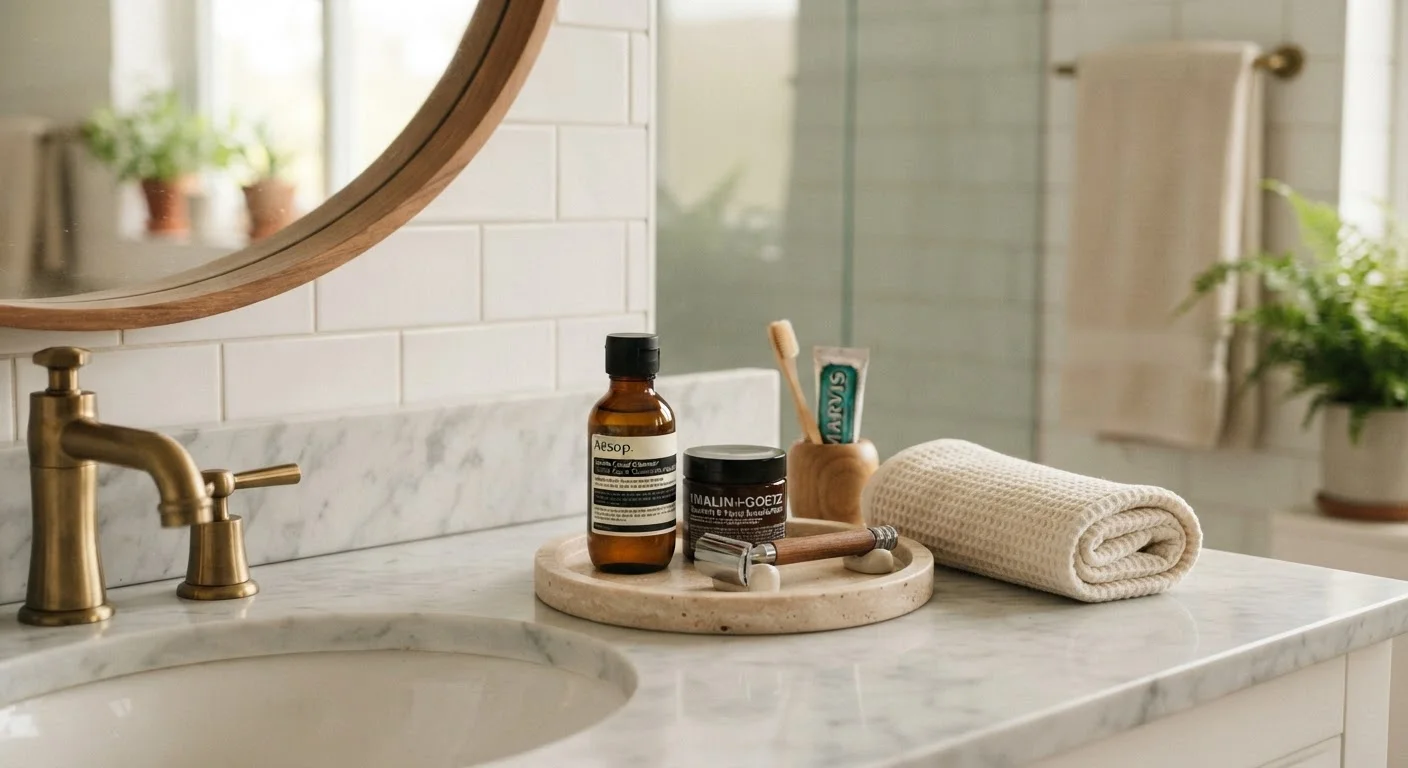
One of the most effective habit-building strategies is reducing friction. Leave your morning products on the counter in the order you use them — cleanser, then moisturizer with SPF. When everything is ready to grab in sequence, you're far less likely to skip a step. It sounds simple because it is.
The Evening Routine
Evening is where consistency pays off. You're removing what the day put on your skin and giving it a clean slate for overnight recovery. This session typically takes five minutes or fewer once it's habit.
Don't Skip the Evening Cleanse
Leaving sunscreen, sweat, and daily buildup on your skin overnight can clog pores and slow skin's natural repair process. The evening cleanse is arguably more important than the morning one. Even on nights when you're tired, a 60-second cleanse is always worth doing.
For days when time is tight and the routine feels like a burden, Routines That Hold Up When Life Gets Busy offers stripped-back alternatives that keep the essentials in place without the full process.
Making It Stick
The biggest obstacle to any grooming routine isn't the steps — it's remembering and motivating yourself to do them. A few practical strategies help here. Keep your products visible on the counter rather than stored away; out of sight often means out of mind. Stack the habit onto something you already do automatically, like brushing your teeth. If you want a broader framework for designing a morning routine you'll actually maintain, Building a Morning Routine That Actually Sticks lays out a practical system worth reading.
For hair specifically, washing frequency depends on your hair type and lifestyle — there's no universal rule. For a clear, type-inclusive breakdown, Hair Care Without Overwhelm is worth bookmarking alongside this routine.
Skin Concerns Warrant Professional Input
This routine covers general grooming and basic skin maintenance. If you're experiencing persistent acne, unusual skin changes, rashes, or other concerns, a dermatologist is the right resource — not a new product. General personal care information is not a substitute for individualized medical or dermatological advice.