
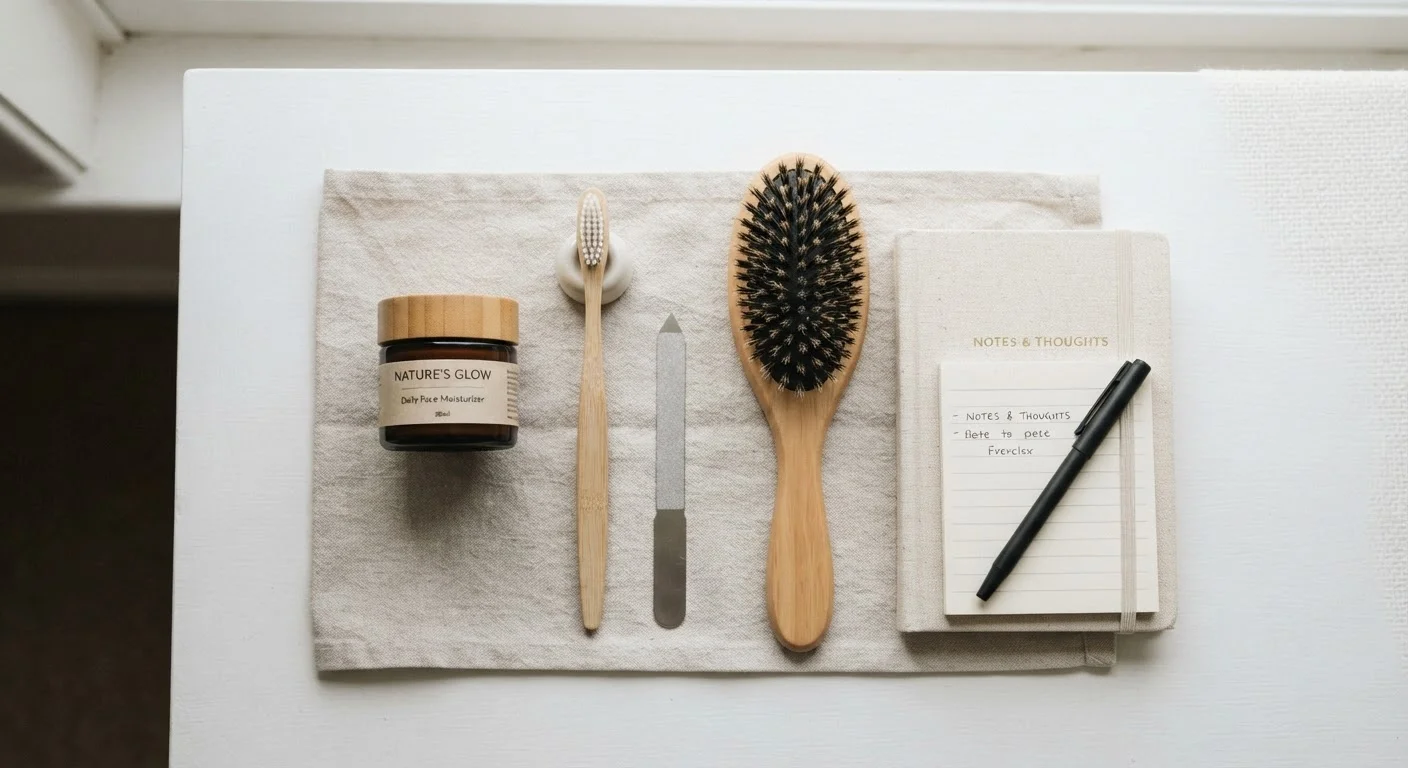
Why a Weekly Audit Works
Personal care has a way of quietly slipping when life gets busy. You might moisturize religiously for two weeks, then forget entirely for another two. A weekly audit — a brief, structured self-check — removes that inconsistency by turning scattered habits into a dependable rhythm.
The goal here isn't perfection. It's awareness. When you know which areas you've been skipping, you can make small course corrections before anything gets out of hand. Think of this checklist as a five-senses inventory of your skin, mouth, nails, and hair — all the everyday areas that shape how you feel and present yourself. For a broader look at how these four areas connect and support each other, see The Full Picture on Personal Care.
You can also pair this with a mental wellness check-in at the end of each week — physical and emotional wellbeing tend to reinforce each other.
Fluoride toothpaste and soft-bristle toothbrush
Essential for completing the oral hygiene section of the audit effectively.
Nail clippers and a fine-grit nail file
Used to trim and smooth nails as part of the weekly nail care check.
SPF 30+ sunscreen
Required for the skincare section to verify daily sun protection habits.
Wide-tooth comb or detangling brush
Helps assess and gently detangle hair during the hair health check.
Hand mirror or magnifying mirror
Useful for examining hard-to-see areas of skin, nails, and the inside of your mouth.
Notebook or notes app
Track which items you completed each week and flag recurring gaps in your routine.
How to Use This Checklist
Pick one consistent time slot each week — Sunday evening, Saturday morning, whatever fits your schedule. You don't need to complete every item in one sitting, but moving through the full list in order ensures nothing gets overlooked. Mark items as you go, and if you notice a recurring skip, that's your signal to look closer at that habit.
This Checklist Is Informational, Not Medical Advice
The items in this audit are based on general personal care guidance. They are not tailored to any individual's health condition, skin type, or medical history. If you have a diagnosed skin condition, dental issue, or other health concern, consult your healthcare provider or dermatologist before adjusting your routine based on this checklist.
If you're planning a trip and want to maintain your routine on the road, the travel-ready personal care kit checklist is a helpful companion to this one.
Skincare
Oral Hygiene
Nail Care
Hair Health
Reading the Results
After you complete the audit, scan for patterns. Consistently skipping nail care? It might be a habit-placement issue — try keeping a nail file near your desk or nightstand. Oral hygiene items feeling rushed? A two-minute timer can help you stay accountable without overthinking it.
Nail changes in particular are worth paying attention to. Unusual discoloration, brittleness, or changes in texture can occasionally signal something worth discussing with a healthcare provider. Our guide to maintaining healthy nails at home covers what to watch for.
Don't Ignore Persistent Changes
A weekly audit is a habit-building tool, not a diagnostic one. If you notice a recurring skin irritation, ongoing gum bleeding, nail changes that don't resolve, or unusual hair shedding, those are signals to bring up with a healthcare provider — not just items to check off a list. Early attention to changes is generally more effective than waiting to see if they resolve on their own.
This article is for general informational purposes only and is not a substitute for professional medical advice. If you notice persistent skin changes, pain, unusual nail or hair loss, or oral symptoms, consult a qualified healthcare provider.