The Megapixel Myth
Megapixels measure the total number of light-capturing points (pixels) in a camera's sensor. A 50-megapixel camera produces images with 50 million pixels, which matters when you want to print a large poster or heavily crop a photo without losing sharpness. But for everyday social sharing or viewing on a screen, the differences between 12 and 50 megapixels are rarely visible.
What matters more is sensor size — the physical dimensions of the chip behind the lens. A larger sensor can accommodate bigger individual pixels, which collect more light. More light means less noise (the grainy texture in dark shots) and more accurate color. This is why a phone with a physically larger sensor can outperform a competitor with twice the megapixel count.
Manufacturers also use pixel binning to bridge the gap: a 200-megapixel sensor may combine groups of four or sixteen pixels into one for typical shots, producing a lower-resolution but far cleaner image. Understanding this helps explain why spec-sheet megapixel counts can be misleading at face value. For a broader look at how resolution figures translate across devices, see how resolution works on screens.
1/1.28"
Sensor size of flagship-class phone cameras
Larger sensor dimensions (expressed as fractions of an inch) are one of the most meaningful hardware indicators of low-light performance in current high-end smartphones.
~4x
Typical max optical zoom on multi-lens phones
Many phones with multi-lens systems offer between 3x and 5x optical zoom; beyond that range, quality is maintained by computational upscaling rather than true optical magnification.
Aperture: Light, Depth, and the f-Number
Aperture describes how wide the lens opening is when a photo is taken. It's written as an f-number — such as f/1.8 or f/2.4. Counterintuitively, a smaller f-number means a wider opening, which admits more light. This is why phones with f/1.6 lenses tend to handle dim rooms better than those with f/2.4 lenses.
A wider aperture also produces a shallower depth of field — the effect where the subject is sharp and the background is softly blurred. Smartphone lenses are physically small, so this effect is naturally limited; the "portrait mode" blur you see on phones is largely a software approximation rather than pure optics.
Most smartphone lenses have a fixed aperture, meaning the lens doesn't physically adjust the way a professional camera lens does. Some higher-end phones include a dual-aperture system that can switch between two settings, but this remains relatively uncommon. Learn how lenses, sensors, and software work together to produce the photos your phone takes.
Test With Real-World Shots Before Deciding
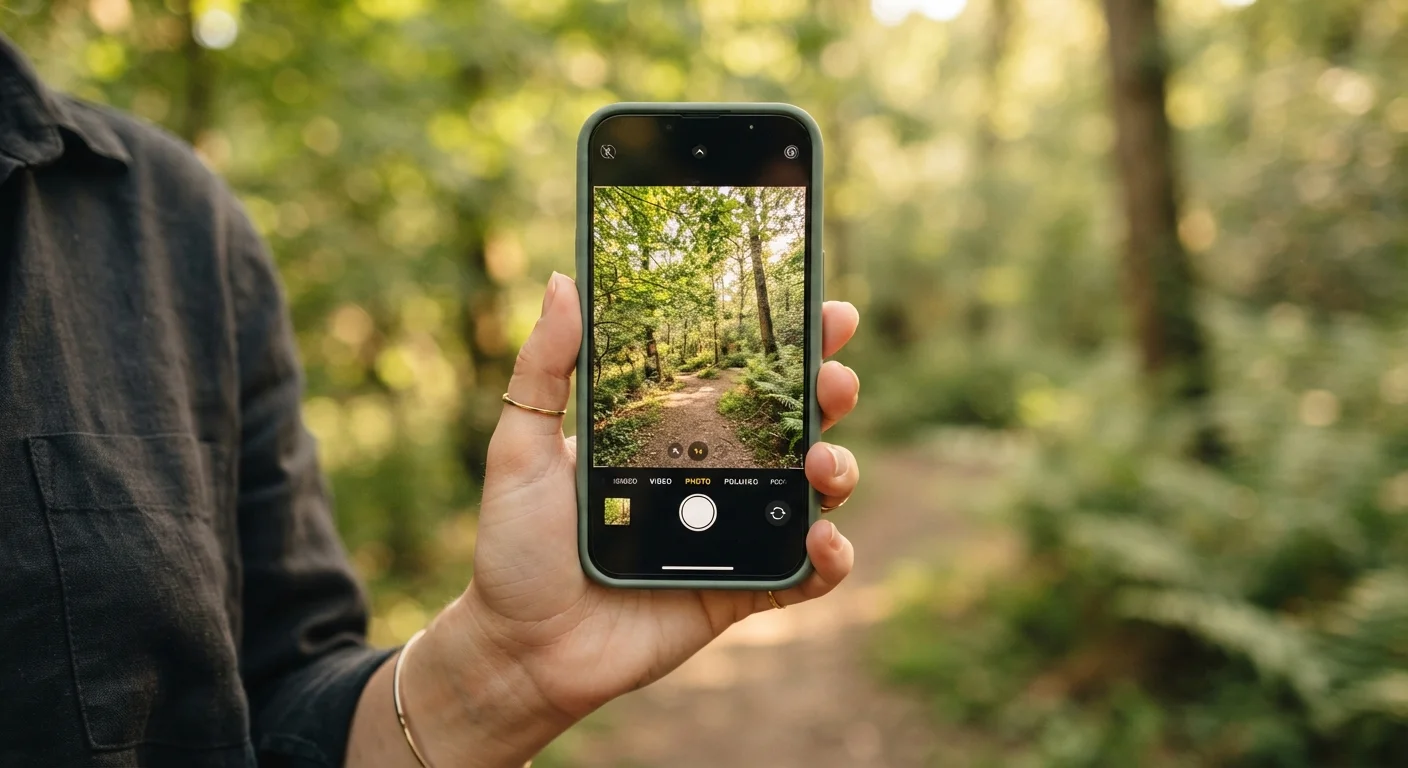
Before settling on an assessment of any phone camera, look for sample photos taken in conditions that match your actual use — indoor gatherings, low-light settings, or fast-moving subjects. Tech journalism outlets regularly publish unedited comparison shots that reveal how cameras perform outside controlled environments.
Night Mode, Zoom, and the Software Factor
Night mode is one of the most significant advances in mobile photography in recent years, and it operates almost entirely in software. When you activate it, your phone takes a rapid sequence of exposures — sometimes over several seconds — and uses algorithms to align and merge them. Bright areas are toned down, dark areas are brightened, and noise is reduced. The result can look remarkably like a photo taken in better lighting conditions.
The quality of night mode output varies considerably between phones, and it isn't captured by any single hardware specification. This is one reason why real-world sample images are more informative than spec comparisons.
Zoom is another area where marketing language can obscure reality. Optical zoom physically adjusts the lens or uses a separate telephoto lens to bring subjects closer without degrading the image. Digital zoom simply crops the existing photo and enlarges it — a process that reduces detail noticeably. A phone advertised with "10x zoom" may achieve only 3x optically, with the rest accomplished digitally.
Computational photography — the software layer that processes every shot you take — now plays a dominant role in determining image quality. Features like HDR (High Dynamic Range), scene recognition, and focus tracking are all software-driven. This is why two phones with similar hardware specs can produce noticeably different photos. For a related look at how display specs translate to real-world viewing, see what screen resolution numbers actually mean.
Reading Spec Sheets With a Critical Eye
When evaluating a phone's camera, treat the spec sheet as a starting point rather than a verdict. A few practical habits help:
- Look for sensor size, often listed in fractions of an inch (e.g., 1/1.28"). Larger numbers indicate a bigger sensor.
- Check whether telephoto lenses are optical or digital — product pages sometimes list total zoom range without clarifying the breakdown.
- Seek out sample photos taken in conditions similar to your own: indoor family gatherings, outdoor daylight, low-light venues.
- Note the number of lenses — a wide, ultrawide, and telephoto combination gives meaningful versatility across shooting situations.
Spec numbers are a shorthand, not a guarantee. The most reliable way to understand a camera's real-world behavior is to see it in action under realistic conditions — not under studio lighting on a manufacturer's website.
“The best camera is the one that does the most with what light is available — and increasingly, 'what it does' is decided by software, not just hardware.”
— Marc Levoy, Computer scientist and computational photography researcher