The Lens: Gathering and Focusing Light
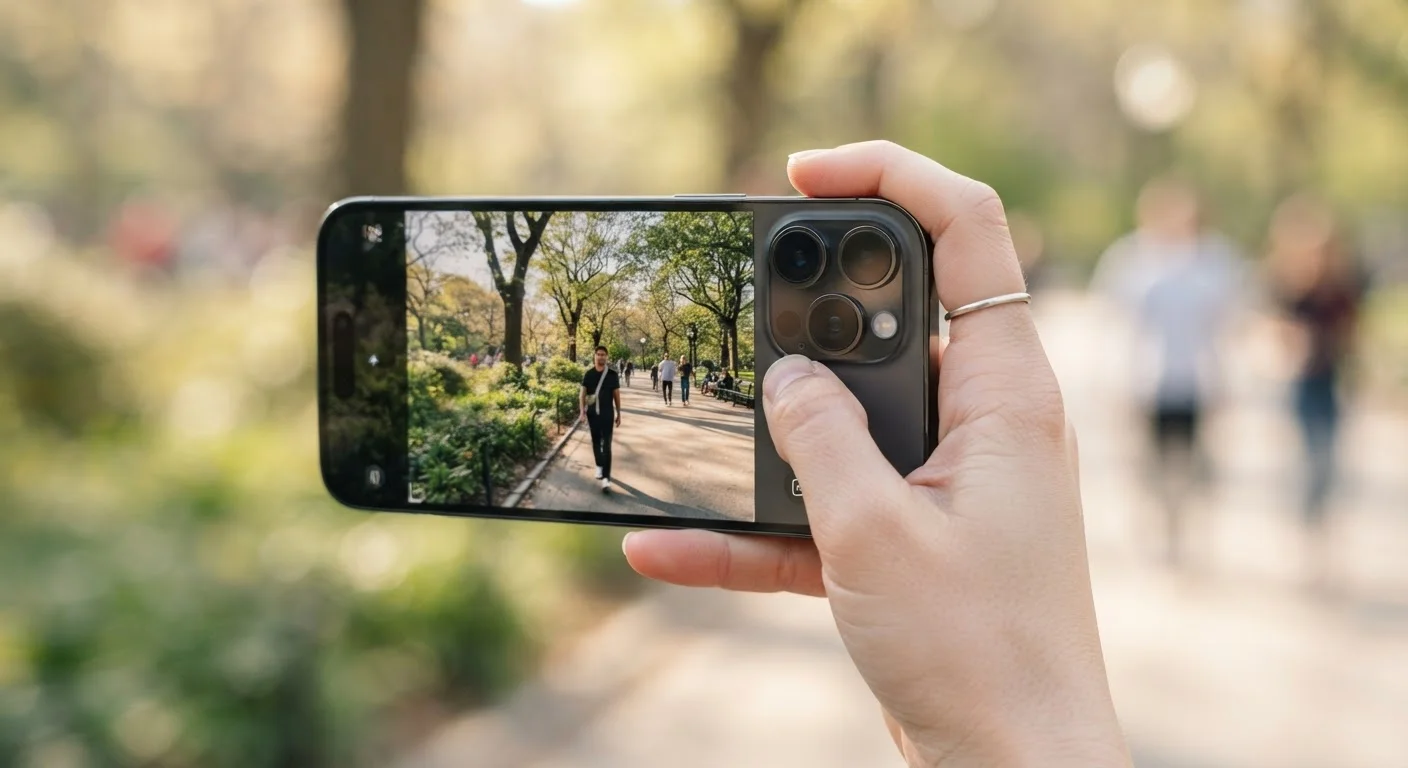
Before any digital processing begins, light has to physically enter the camera. The lens is responsible for bending incoming light rays so they converge precisely on the surface of the sensor behind it. Smartphone lenses are extremely small — typically just a few millimeters across — yet they are engineered from multiple stacked glass or plastic elements to minimize distortion and chromatic aberration (color fringing at edges).
The aperture, expressed as an f-number, controls how wide the lens opening is. A lens rated f/1.8 admits roughly twice as much light as one rated f/2.8. Because smartphone sensors are small and the lenses are fixed (you cannot swap or manually adjust them as on a DSLR), manufacturers try to use the widest aperture physically practical for the camera's size.
Most phones now include at least two — and often three or four — physically separate rear lenses to compensate for the limitations of any single fixed optic. For a full tour of how the lens fits alongside other hardware components, see our plain-language smartphone hardware guide.
The Sensor: Turning Light Into Data
Behind the lens sits the image sensor — a chip covered in millions of tiny light-sensitive wells called photodiodes. Each photodiode corresponds to one pixel. When the shutter opens, photons strike the photodiodes and generate electrical charges; the stronger the charge, the brighter the pixel recorded.
1/1.3"
Sensor size in flagship smartphone cameras
Some high-end smartphones now use sensors approaching one inch diagonally, closing the gap with compact dedicated cameras.
~50ms
Time to capture a multi-frame HDR burst
Modern smartphone ISPs can capture, align, and merge multiple frames faster than the human eye can detect, all within a single shutter press.
3–5x
Optical zoom range on multi-lens phones
Many current smartphones include a telephoto lens offering 3× to 5× optical magnification before digital zoom takes over.
Sensor size — the physical dimensions of this chip — matters more than pixel count for most practical photography. A larger sensor can fit larger individual photodiodes, which gather more light per pixel. More light per pixel means less electronic noise in the final image, which is why phones with physically larger sensors tend to perform better in dim conditions even when their megapixel count is lower.
Most smartphone sensors also use a technology called pixel binning: grouping four or more small pixels and combining their data to simulate a single larger, light-hungry pixel. This is why a 108-megapixel camera often defaults to producing 12-megapixel images — the phone is binning pixels to improve image quality rather than maximize raw resolution.
Computational Photography: The Software Layer
Once the sensor captures raw data, the phone's image signal processor (ISP) — a dedicated chip built for this task — goes to work. Modern smartphones routinely capture a rapid burst of frames in the fraction of a second you press the shutter. Software then analyzes and merges these frames to reduce noise, expand dynamic range (recovering detail in both bright highlights and dark shadows), and sharpen fine textures.
Get More From Night Mode
When using Night Mode, brace your phone against a stable surface or hold it with both hands. The longer the phone is still during its multi-frame capture, the more accurately the software can align and merge frames — and the cleaner your final image will be.
Night Mode is one of the most visible examples: instead of a single long exposure that risks motion blur, the phone takes many short exposures and uses algorithms to align and stack them, producing a bright, relatively sharp image in near-darkness. Portrait Mode achieves its background blur — sometimes called bokeh — not from a physically wide aperture but from depth-mapping algorithms that estimate distance and apply synthetic blur to everything beyond the subject.
For a deeper look at how individual camera specs translate to real-world results, our guide to decoding camera specs explains which numbers actually matter and which are marketing noise.
Putting It All Together
Understanding the three-layer system — optics, sensor, software — helps explain why two phones with similar megapixel counts can produce visibly different results. A phone with a slightly lower-resolution sensor but a wider aperture lens and a more capable ISP will typically outperform a rival that leads on pixel count alone.
If you are still building comfort with your device generally, our beginner's smartphone guide covers the fundamentals of settings, storage, and daily use. And if you are comparing phone and tablet options and wondering how camera capability factors in, our smartphone-vs-tablet breakdown walks through the trade-offs in plain terms.