
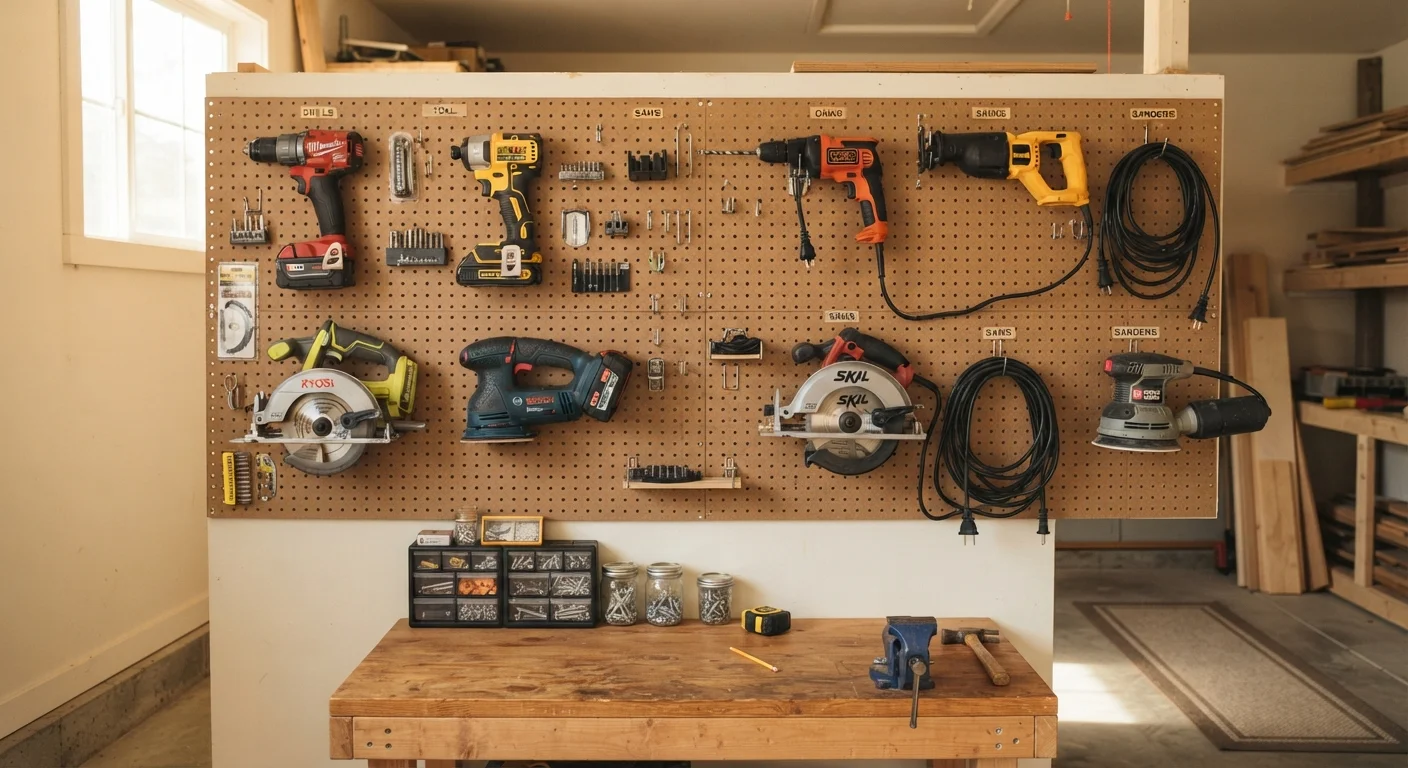
The Core Trade-Off: Power Delivery vs. Freedom of Movement
When you plug a corded tool into an outlet, you're drawing from a steady, effectively unlimited power supply. The motor gets what it needs, every time, for as long as the job takes. That consistency is the central argument for corded tools — it's why heavy-duty saws, routers, and shop vacuums are still predominantly corded in professional settings.
Cordless tools run on rechargeable battery packs, which means you gain full range of motion — no cord to manage, no outlet required. That's genuinely useful in attics, under sinks, outdoors, or anywhere an outlet is inconvenient. But that freedom comes with a battery that has finite charge, finite lifespan, and a price tag that often represents a significant share of the tool's total cost.
The decision isn't really about which technology is better. It's about which trade-off fits your specific situation.
This Isn't an Either/Or Decision
Many homeowners end up with a mix: corded tools for the heavy-duty or stationary tasks, cordless for the everyday quick jobs. You don't have to standardize on one approach. The goal is matching the power source to the actual demands of each tool's role in your household. Starting with one or two tools in a cordless platform and adding corded options for specific high-demand needs is a common and practical path.
When Corded Makes More Sense
Corded tools have a clear advantage in three scenarios: sustained use, peak power demand, and stationary workstation setups.
If you're cutting through hardwood, running a belt sander across a large floor, or using a circular saw for an afternoon of framing work, a corded tool won't slow down as the battery depletes. You also avoid interruptions to swap or recharge packs.
For appliances that live in one place — a benchtop drill press, a table saw, a garage shop vacuum — the lack of a cord is irrelevant. The outlet is right there, and the corded version typically delivers more power at a lower price point.
Consistent power regardless of charge level
Corded tools draw directly from the grid, so performance doesn't taper as it would with a depleting battery. This matters most in sustained, high-load tasks.
Lower upfront cost for equivalent power
Corded versions of most tools are typically less expensive than their cordless counterparts, since the battery pack — often a significant cost driver — isn't included.
No battery degradation over time
Corded tools don't have batteries to replace or manage. Over several years of use, this simplifies maintenance and eliminates a predictable recurring expense.
Better suited for extended or continuous use
Jobs that run for hours — extended sanding, cutting large quantities of material — are better served by a tool that doesn't require pausing to swap or recharge.
Corded tools also have simpler long-term maintenance economics. There's no battery to replace every few years, and repair options are often more straightforward.
When Cordless Makes More Sense
Cordless tools dominate in situations where mobility directly affects how you work. Driving screws while moving around a room, drilling in a cramped cabinet, cutting material outdoors away from the house — these are tasks where a trailing cord creates real friction.
Modern lithium-ion batteries have closed the performance gap considerably for moderate-duty tasks. A cordless drill handles the vast majority of household drilling and fastening jobs without issue. The same is true for cordless jigsaws, impact drivers, and oscillating multi-tools for typical homeowner use.
Mobility limited by cord length and outlets
Working in a tight space, outdoors, or away from power requires extension cords — which add tripping hazards, voltage drop risk, and general inconvenience.
Battery capacity finite and degrades over time
Lithium-ion battery packs lose capacity through charge cycles, typically requiring replacement after a few years of regular use — adding recurring cost.
Runtime limits interrupt longer tasks
Cordless tools used for extended sessions may require mid-job charging or having spare packs on hand, which adds cost and workflow interruption.
Battery weight adds tool fatigue
Cordless tools tend to be heavier than corded equivalents due to the battery pack. For overhead work or prolonged use, this can contribute to user fatigue.
Platform lock-in reduces flexibility
Battery systems are not interchangeable across manufacturers, meaning switching tool brands may require replacing all existing battery packs — a real cost factor.
One strategic consideration: if you're building a cordless tool collection, staying within a single battery platform means your packs work across multiple tools. This changes the economics — the higher upfront cost of the first battery-included purchase becomes less significant as you add tools that share the same system.
For context on how similar portability trade-offs play out in other product categories, see our desktop vs. laptop trade-off framework.
Appliances Follow the Same Logic
The corded vs. cordless question extends beyond power tools to home appliances — handheld vacuums, stick vacuums, electric screwdrivers, garden trimmers, and more. The same framework applies.
A cordless stick vacuum is genuinely convenient for quick cleanups, but if your home has heavy carpet or shedding pets and you run long cleaning sessions, runtime and suction consistency may frustrate. Our vacuum style comparison explores how design affects real-world performance across different floor types.
~30–50%
Typical cordless price premium over corded equivalents
Battery-included cordless tool kits generally carry a meaningful price premium versus comparable corded models, with the battery pack itself accounting for a large share of that difference.
2–5 years
Typical lithium-ion battery pack lifespan with regular use
Battery longevity depends on charge cycles, storage conditions, and usage intensity — factors that vary considerably by household and tool type.
For a deeper look at how power source affects long-term value in home appliances specifically, the corded vs. cordless appliances guide covers the key variables worth evaluating before purchase.
A Practical Decision Framework
Before choosing between corded and cordless for any tool or appliance, work through these questions:
- Where will you use it? Fixed location or workbench favors corded; moving around the project or home favors cordless.
- How long are your typical sessions? Short bursts suit cordless well; extended continuous use favors corded.
- How demanding is the task? High-torque, high-load work pushes cordless batteries harder and may underperform.
- How often will you use it? For rarely used tools, consider whether ownership makes sense at all — renting or borrowing can be a smarter path.
- Do you already own batteries in a platform? Compatibility can make cordless significantly more cost-effective.
For perspective on upfront cost versus long-term value, our durable vs. disposable cost framework offers a useful model for evaluating any higher-stakes home purchase. More smart shopping guidance is available across our home and shopping coverage.