Why Fit Is the Foundation of Every Great Outfit
No styling principle delivers more impact per dollar than fit. A simple cotton shirt in a flattering fit reads as intentional and put-together; the same shirt a size too large or too small undermines the whole look. Fit is the single variable that separates clothing that works from clothing that just covers you.
The goal isn't a skin-tight silhouette — it's a clean one. Shoulders should sit at your shoulder, not droop or pull. Sleeves should end at the wrist bone for long cuts. Trousers should break lightly at the shoe with no bunching. These are neutral targets that flatter a wide range of body shapes.
When something you love doesn't quite fit off the rack, basic tailoring — hemming pants, taking in a side seam, shortening sleeves — is often inexpensive and dramatically changes the result. Think of tailoring as a finishing tool, not a luxury.
Before buying anything new, put it on and sit down, raise your arms, and walk around for a minute — if it pulls, gaps, or bunches in motion, the fit won't improve with wear.
Fit issues that appear in movement are structural and rarely resolve over time; catching them before purchase saves money and closet clutter.
When evaluating a neutral, hold it next to items you already own in the dressing room — the true test is whether it harmonizes with your actual wardrobe, not just the store's aesthetic.
Color harmony in context is what creates real outfit versatility; a piece that clashes with your existing wardrobe won't be worn regardless of how much you liked it in the store.
Understanding Color: Simple Principles That Always Work
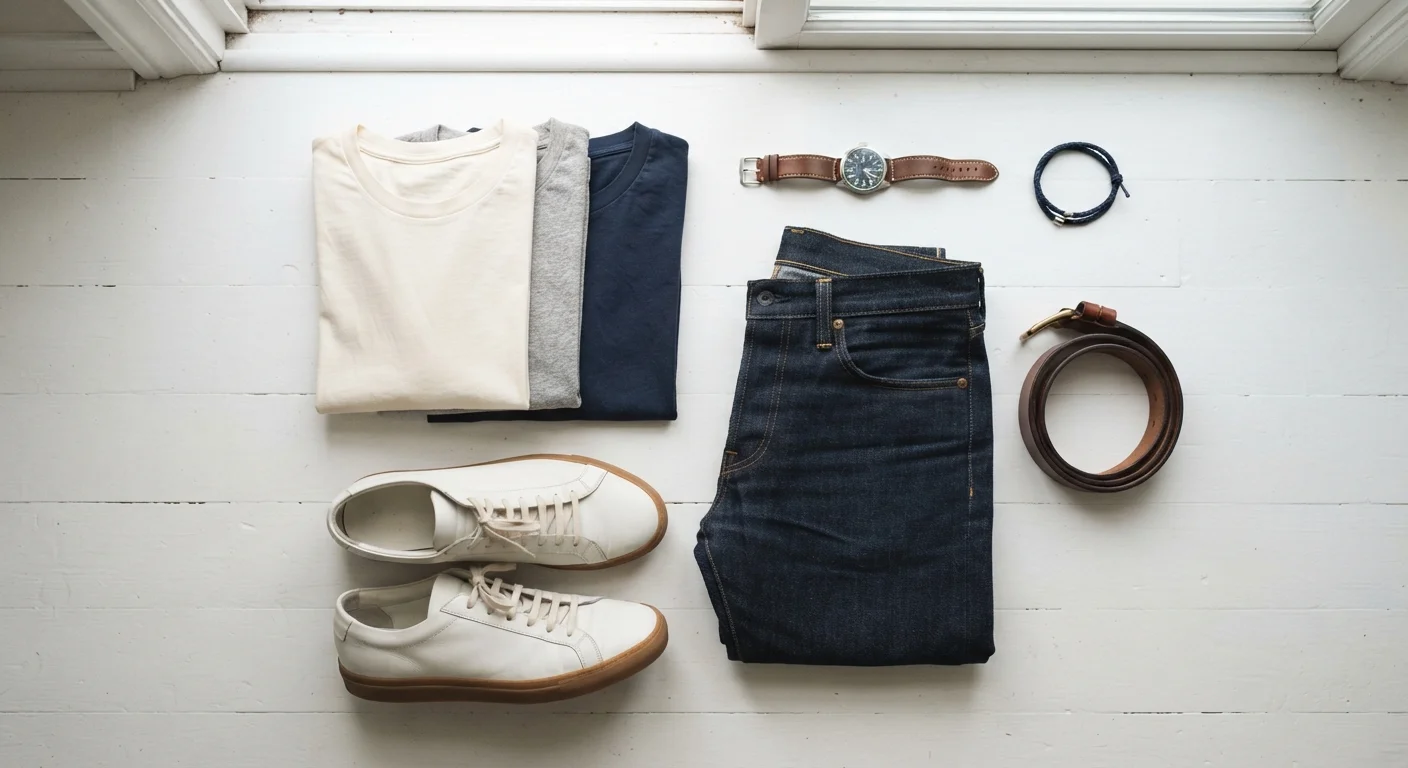
Color is where many people feel stuck, but the underlying logic is actually straightforward. Building around a neutral core — navy, white, grey, black, tan — means almost everything in your closet pairs with everything else. From that base, you can introduce one or two accent colors that suit your skin tone and personal preference.
Contrast matters too. A light top with dark trousers (or vice versa) creates a defined, balanced silhouette. Monochromatic dressing — wearing tonal shades of the same color — is another reliable approach that looks deliberate without requiring color-matching gymnastics.
66%
Consumers who feel more confident in well-fitted clothes
According to a Cotton Incorporated Lifestyle Monitor survey, about two-thirds of consumers reported that clothing fit was the most important factor in feeling confident.
~30%
Of wardrobe items worn regularly by average consumer
Research on clothing behavior consistently finds that most people wear only a fraction of what they own on a regular basis, underscoring the value of intentional buying.
One practical test: if you can't immediately picture three outfits using a new piece with what you already own, it may not earn a spot in your closet. That simple filter prevents impulse buys that create clutter rather than options. For more on stretching a budget without sacrificing style, see principles for dressing well on a budget.
Dressing for the Occasion Without Overthinking It
Occasion dressing used to mean strict dress codes. Today it's more fluid — which is freeing once you have a framework. Most situations fall into a handful of categories: casual, smart casual, business casual, and formal. Knowing the rough expectations of each lets you adapt your existing wardrobe rather than buying entirely new outfits.
- Casual: Jeans, chinos, tees, sneakers. Relaxed but still intentional — clean, fitting clothes read as casual-done-well.
- Smart casual: The most common dress code and the trickiest. A neat trouser or dark jean, a collared shirt or structured top, and a clean shoe covers almost every smart casual situation.
- Business casual: Add a blazer or structured layer to a smart casual foundation. Leather or leather-look shoes replace sneakers.
- Formal: A suit or coordinated dress set. Even here, fit and fabric quality do most of the work.
Don't Over-Interpret Dress Codes
Dress codes like 'smart casual' or 'cocktail attire' are often interpreted differently by different hosts, regions, and generations. When in doubt, ask the host or err on the side of being slightly more dressed up. Overthinking can lead to expensive, single-use purchases — keep the focus on adaptable pieces from your existing wardrobe.
When in doubt, it's nearly always better to be slightly overdressed. Arriving looking polished shows respect; arriving underdressed is harder to recover from in the moment.
Building a Wardrobe With Intention
A functional wardrobe isn't about owning a lot — it's about owning the right things. The most useful approach is to start with versatile basics and add from there only when a genuine gap exists. This method prevents the common problem of a full closet with nothing to wear.
A solid starting point for most people includes: a few well-fitted tops in neutral colors, one or two pairs of quality trousers or jeans, a layering piece (cardigan, blazer, or light jacket), comfortable everyday shoes, and one pair of dressier shoes. That core covers the majority of daily situations.
If you're rebuilding from the ground up, building a wardrobe from scratch walks through that process in detail. And for guidance on making smart choices at the store, smarter everyday shopping habits covers the core consumer skills worth knowing.
Try the Cost-Per-Wear Mental Model
Instead of looking only at a price tag, estimate how many times you'll realistically wear an item over the next year. A $60 pair of quality trousers worn 50 times costs $1.20 per wear — often a better value than a $15 item worn twice. This reframe helps prioritize quality basics over cheap impulse purchases.
Caring for Your Clothes So They Last
How you care for clothing directly determines how long it stays looking good. Most garment damage — pilling, shrinkage, fading — happens in the wash or dryer, not from normal wear. Defaulting to cold water, gentle cycles, and air drying for anything you want to preserve is a reliable baseline.
Always check care labels before washing a new garment. Labels aren't suggestions — they reflect how the fabric behaves under stress. Wool, silk, and structured pieces like blazers almost always benefit from hand washing or dry cleaning rather than machine washing.
Proper storage extends garment life too. Knits should be folded rather than hung to prevent stretching. Hang structured pieces on shaped or padded hangers. Rotate through your wardrobe so high-use pieces get rest between wearings.
Fabric Type Affects Care Needs Significantly
Natural fibers like cotton, linen, wool, and silk each respond differently to heat, water, and agitation than synthetic fabrics like polyester or nylon. Learning the basic characteristics of a few common fabrics helps you make smarter care decisions — and better purchasing choices — without memorizing every label instruction.
Grooming and Personal Care: The Rest of the Picture
Style doesn't stop at clothing. Hair, skin, nails, and overall grooming complete the head-to-toe picture that shapes how you're perceived — and more importantly, how you feel about yourself. The good news: a consistent, simple routine delivers most of the visible benefit without requiring extensive time or expense.
If you're not sure where to start with grooming and skincare, personal care for beginners is a practical, non-overwhelming introduction. For a broader overview that connects skin, hair, nails, and oral health into one cohesive routine, the full picture on personal care covers all of it together. You can also explore the full personal care hub for accessible routines suited to real life.
Clothing and grooming work together — each makes the other more effective. A well-fitted outfit paired with clean, healthy skin and tidy hair creates a complete impression that's greater than the sum of its parts.
This article is for general informational and educational purposes only and does not constitute professional styling, financial, or medical advice. Consult qualified professionals for personalized guidance.