
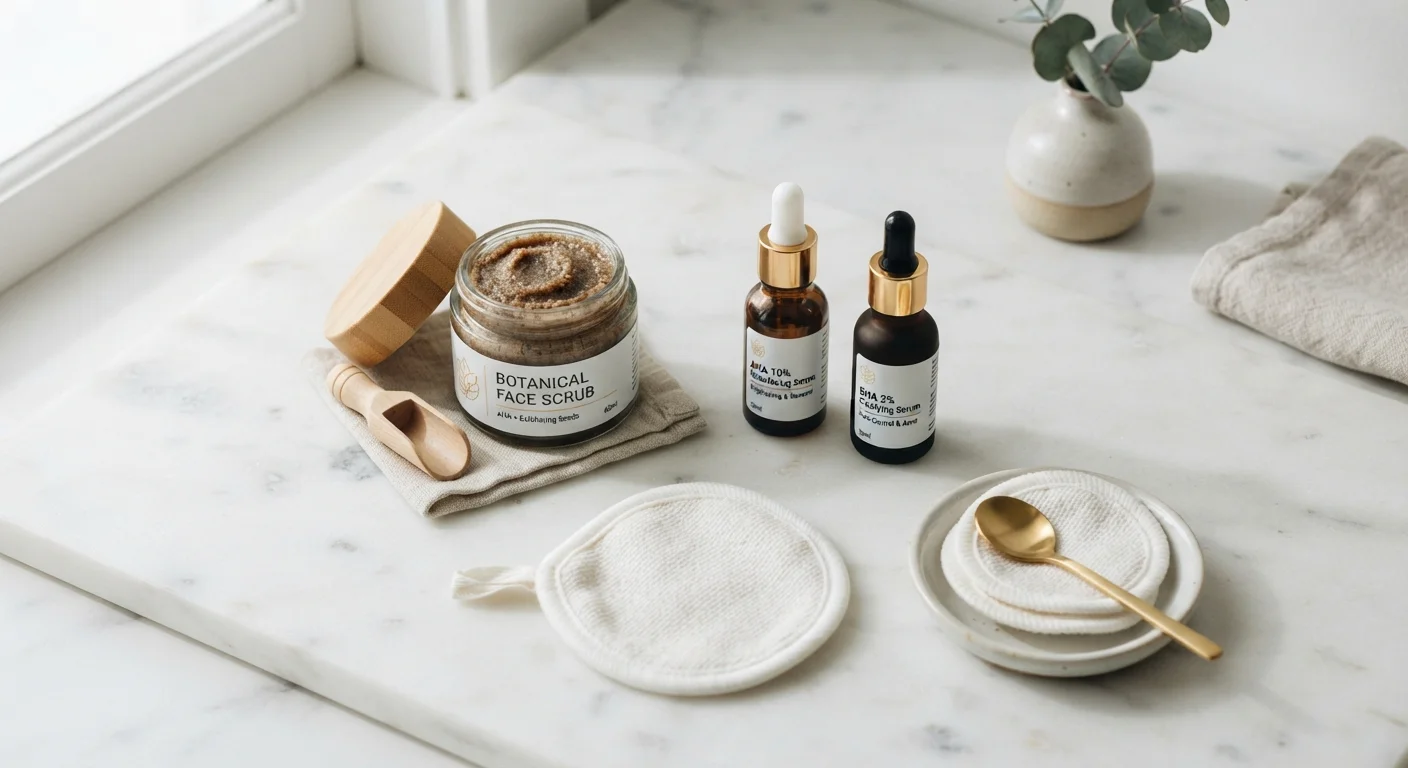
What Exfoliation Actually Does
Skin naturally sheds dead cells from its outermost layer — the stratum corneum — roughly every 28 to 40 days, a process that slows with age. When that turnover lags, skin can look dull, feel rough, or develop clogged pores. Exfoliation speeds that process along, either by breaking down the cellular glue that holds dead cells together or by physically scrubbing them away.
Both approaches aim at the same outcome: a smoother, clearer surface. But the mechanism matters significantly, especially for people with reactive or melanin-rich skin. As part of a balanced routine, exfoliation fits after cleansing and before moisturizing — for a full breakdown of step order, see The Anatomy of a Daily Skincare Routine.
How Chemical Exfoliants Work
Chemical exfoliants use acids or enzymes to loosen the bonds between dead skin cells without any scrubbing. The three main categories are:
- AHAs (alpha-hydroxy acids) — such as glycolic and lactic acid — are water-soluble and work primarily on the skin's surface. They're well-studied for improving texture and mild discoloration.
- BHAs (beta-hydroxy acids) — most commonly salicylic acid — are oil-soluble, meaning they can penetrate into pores to dissolve debris. They're commonly recommended for oily or acne-prone skin.
- Enzymes — derived from fruits like papaya or pineapple — digest dead skin proteins more gently, making them a popular option for sensitive skin types.
Concentration matters: over-the-counter products typically contain lower acid percentages than professional treatments. Starting with a lower concentration and increasing gradually is generally recommended to reduce irritation risk.
Patch Test Before Committing
Whether trying a new acid serum or a new scrub, apply a small amount to the inside of your wrist or behind your ear and wait 24 hours before using it on your face. Reactions can range from mild redness to more significant irritation, and catching them early saves your skin — and your routine.
For those navigating exfoliation alongside broader skin concerns, Skincare Across Skin Tones offers context on how melanin-rich skin responds differently to active ingredients.
How Physical Scrubs Work
Physical exfoliants rely on friction. Sugar granules, ground seeds, microbeads (now widely banned due to environmental impact), rice powder, or textured cloths manually dislodge dead cells when massaged across the skin. The result is immediate — skin often feels softer right away.
The tradeoff is control. Applied too aggressively, physical scrubs can cause micro-tears in the skin barrier, trigger inflammation, or exacerbate hyperpigmentation — particularly relevant for darker skin tones where post-inflammatory marks can linger. Particle size and shape matter too: irregularly shaped particles (like crushed walnut shell) are considered harsher than round, uniform ones like jojoba beads.
Avoid Scrubbing Compromised Skin
Physical scrubs are generally not recommended for active acne, rosacea, or eczema-prone skin. Friction can spread bacteria across acne lesions or further damage an already-compromised skin barrier, leading to increased redness, inflammation, and slower healing.
Physical scrubs are generally not recommended for active acne, rosacea, or eczema-prone skin, where friction can spread bacteria or further compromise an already-compromised barrier.
Side-by-Side: Key Differences at a Glance
The chart below summarizes how the two approaches compare across practical criteria most relevant to everyday skincare decisions.
| Chemical Exfoliants | Physical Scrubs | |
|---|---|---|
| Mechanism | Dissolves bonds between dead cells | Manually abrades dead cells away |
| Speed of results | Gradual, over days to weeks | Immediate surface smoothness |
| Penetration depth | Surface to pore level (AHA vs. BHA) | Surface only |
| Sensitive skin suitability | Better, especially enzymes or low-% AHA | Higher risk of irritation or micro-tears |
| Acne-prone skin | BHAs well-suited; won't spread bacteria | Risk of spreading bacteria via friction |
| Environmental concern | Minimal packaging waste with liquids | Particle runoff if not biodegradable |
| Learning curve | Moderate — concentration and pH matter | Low — easy to use immediately |
It's worth noting that these categories aren't mutually exclusive — some people use a gentle physical scrub on the body while relying on a chemical exfoliant for the face, where skin tends to be more reactive. For a related look at how cleansing choices affect skin, see Face Wash vs. Cleanser.
How Often Should You Exfoliate?
Regardless of which type you choose, frequency is one of the most common mistakes people make. Dermatologists generally suggest one to three times per week as a starting point, adjusting based on how skin responds. Signs of over-exfoliation include persistent redness, tightness, stinging, and increased breakouts — all signals to scale back.
Sunscreen use becomes especially important when using chemical exfoliants, as AHAs in particular can increase photosensitivity. This is a well-documented interaction, not a minor footnote. For anyone building a fuller personal care routine, Physical vs. Chemical Exfoliant: Which Suits Your Skin offers additional guidance on matching approach to skin type.
This article is for general informational purposes only and does not constitute medical or dermatological advice. Consult a qualified dermatologist for concerns specific to your skin.