
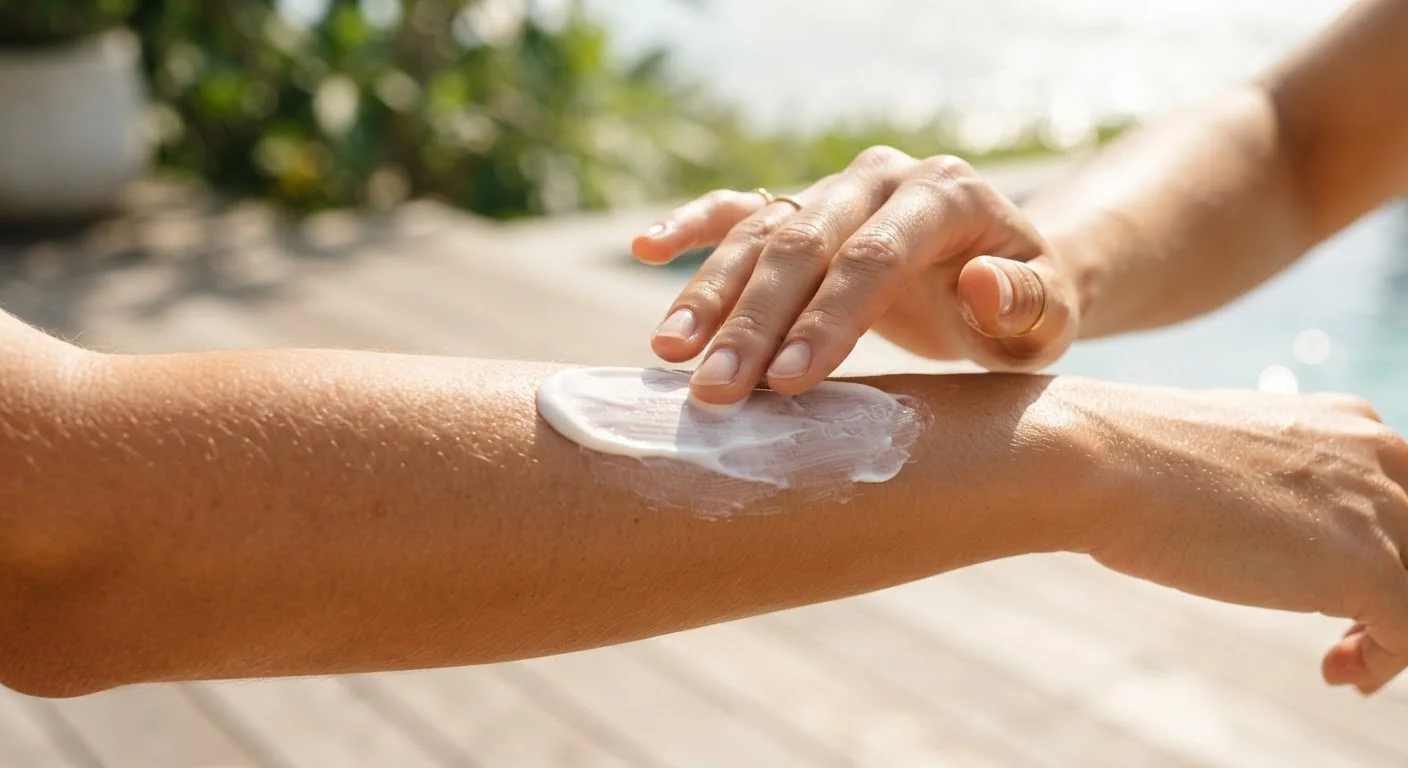
Why Daily Sunscreen Is a Habit, Not Just a Beach-Day Item
Most of us grew up reaching for sunscreen only when the beach or pool was on the agenda. But dermatology research consistently shows that cumulative, everyday UV exposure — the kind you get walking to your car, sitting near a window, or running errands — accounts for a significant share of long-term skin damage. Building SPF into your morning routine is less about vanity and more about reducing that slow, compounding exposure over years.
Sunscreens work by absorbing, reflecting, or scattering ultraviolet radiation before it penetrates the skin. Chemical filters (like avobenzone or octinoxate) absorb UV energy and release it as heat. Mineral filters (titanium dioxide and zinc oxide) sit on the surface and physically deflect rays. Both approaches are considered effective when applied correctly. The phrase broad-spectrum on a label means the formula addresses both UVA rays (linked to skin aging and deeper tissue damage) and UVB rays (the primary cause of sunburn).
For a deeper look at where sunscreen fits within a complete morning routine, see the anatomy of a daily skincare routine.
80%
UV rays that penetrate cloud cover
The World Health Organization notes that up to 80% of UV radiation reaches the earth's surface even on overcast days.
~2mg/cm²
Amount needed to match labeled SPF
Regulatory testing for SPF ratings applies 2 milligrams of sunscreen per square centimeter — a quantity most users significantly under-apply in practice.
Common Sunscreen Myths — Corrected
Confusion about SPF is remarkably widespread, and it has real consequences for how people protect themselves. Here are some of the most persistent misconceptions, paired with what the evidence actually shows.
Myth
A higher SPF number means I'm fully protected and don't need to reapply.
Fact
No SPF rating equals complete protection, and all sunscreens degrade with sweat, water, and time — reapplication every two hours outdoors is necessary regardless of SPF number.
SPF 30 blocks roughly 97% of UVB rays; SPF 50 blocks about 98%. The difference sounds small but matters with extended exposure. More importantly, those ratings assume you've applied the right amount and that the product is still intact on your skin. Sweating, swimming, touching your face, and even wind break down the protective layer. Reapplication is not optional — it's built into how the protection works.
Myth
People with darker skin tones don't need sunscreen because melanin protects them.
Fact
Melanin does offer some natural UV protection, but it is not equivalent to sunscreen and does not prevent all UV-related skin damage or skin cancer risk.
Melanin provides an estimated natural SPF of roughly 13 in deeply pigmented skin, according to some research — which is meaningful but far below what dermatologists recommend for daily use. People with melanin-rich skin can and do develop skin cancers, and UV damage contributes to hyperpigmentation and uneven skin tone. Skincare across skin tones explores what inclusive sun care actually looks like for different complexions.
Myth
Cloudy or overcast days mean UV rays aren't a problem.
Fact
Up to 80% of UV radiation can penetrate cloud cover, meaning overcast skies offer very limited protection from sun damage.
Clouds block visible light and heat more effectively than they block UV radiation. This is why people often get unexpectedly sunburned on cool, overcast beach days — they're not feeling the heat signal that usually prompts them to seek shade or reapply sunscreen. Altitude compounds this: UV intensity increases by roughly 10–12% for every 1,000 meters of elevation gain, making mountain environments particularly high-risk even when it doesn't feel hot.
Myth
Sunscreen through a window protects me from all UV exposure while indoors.
Fact
Standard window glass blocks most UVB rays but transmits a significant portion of UVA rays, which penetrate deeper into skin.
UVA rays have a longer wavelength and pass through standard glass more readily than UVB rays. This matters for people who sit near windows for extended periods — drivers, office workers with window-facing desks, or those who work from home beside large windows. Broad-spectrum sunscreen applied in the morning provides a practical layer of defense for this type of indirect, cumulative exposure.
For even more myth-busting detail, sun protection myths that dermatologists keep correcting goes deep on some of the most stubborn beliefs.
The Gaps Most People Don't Think About
Even committed SPF users often miss a few key spots or moments. Ears, the back of the neck, the tops of the feet, and the lips are frequently skipped. Lips are particularly vulnerable because lip skin is thin and lacks the melanin concentration found elsewhere — lip balms with SPF address this gap directly.
Don't Skip Reapplication After Two Hours
Even a high-SPF broad-spectrum formula begins losing effectiveness once it breaks down from sweat, humidity, or physical contact. Dermatology guidance consistently recommends reapplying every two hours during outdoor activity, and immediately after swimming or heavy sweating. Setting a phone reminder can make this habit stick without having to think about it.
Application amount matters just as much as frequency. The standard test for SPF ratings uses 2 milligrams of product per square centimeter of skin — roughly a nickel-sized dollop for the face alone, and a full shot glass worth for exposed body skin. Most people apply a fraction of that, which means the effective SPF they receive is considerably lower than the label number suggests.
If you have sensitive skin and worry about reactions to certain filters, sensitive skin and personal care covers how to adapt your approach without giving up protection. And sunscreen is just one of several often-overlooked habits — personal care habits most people skip is worth a read if you want a broader picture.
This article is for general informational purposes only and is not a substitute for professional medical or dermatological advice. Consult a qualified healthcare provider for guidance specific to your skin type or concerns.