What a Personal Computer Actually Is
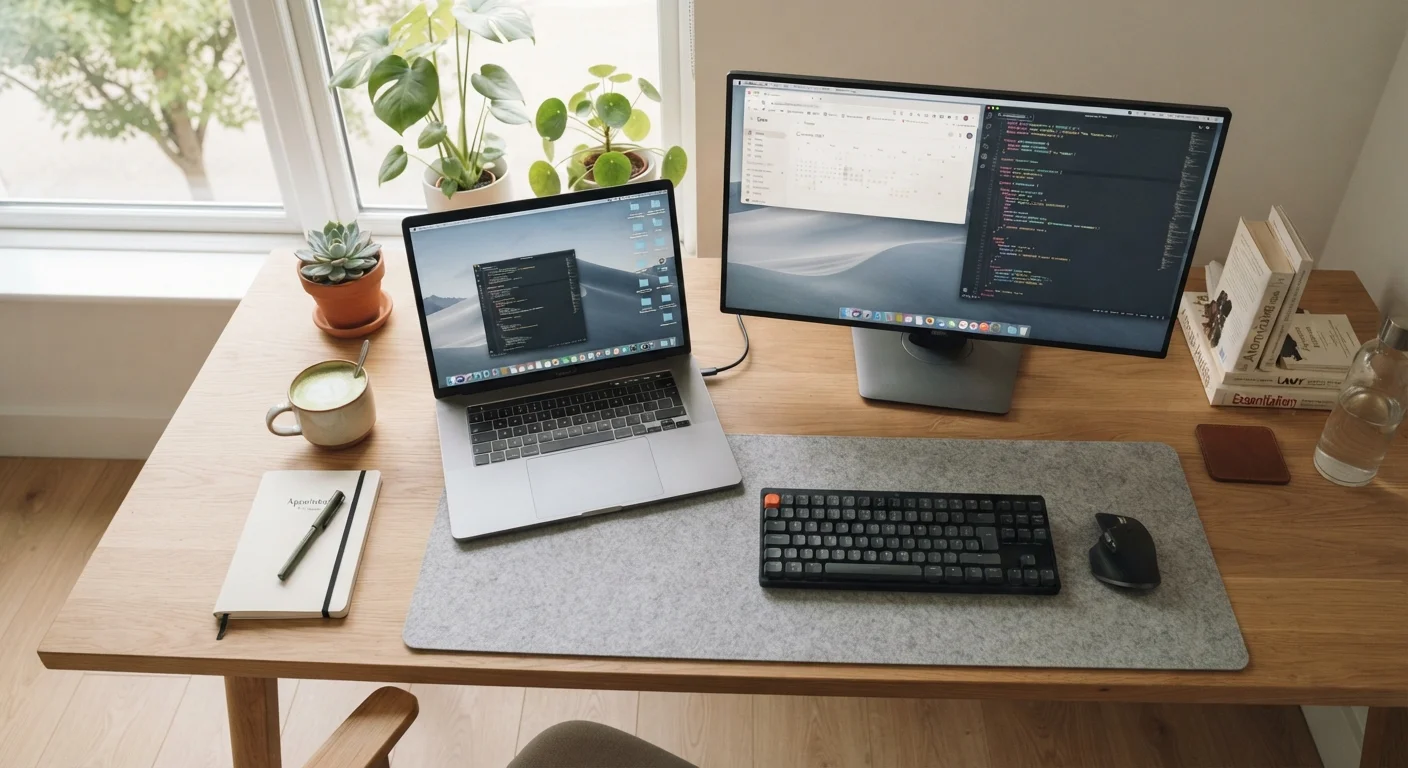
A personal computer — commonly called a PC — is a general-purpose computing device designed for individual use. That broad definition covers desktop towers, laptops, and all-in-one units. What they share is a common structure: physical components that process information, paired with software that tells those components what to do.
The distinction between desktop and laptop is mostly about form. Desktops are stationary and often easier to upgrade over time; laptops trade that flexibility for portability. Either way, the underlying concepts are identical, which means understanding one helps you understand both.
If you want a deeper look at how hardware and software interconnect, this complementary beginner's orientation walks through the same foundations from a different angle. For broader home electronics context, the Home Tech Basics hub is a useful starting point.
Hardware
The physical components of a computer — the parts you can physically touch, such as the processor, memory chips, and storage drive.
Software
Programs and instructions that run on hardware. This includes the operating system and individual applications like browsers or word processors.
Operating System (OS)
The foundational software that manages all other programs and hardware on a computer. Windows and macOS are the most common examples in the US.
RAM
Random Access Memory — the computer's short-term working memory that holds information currently in use. More RAM means the computer can handle more tasks at once.
SSD
Solid-State Drive — a type of storage that saves files permanently and retrieves them much faster than older mechanical hard drives.
CPU
Central Processing Unit — the main processor chip that executes instructions and runs programs. Often called the 'brain' of the computer.
Router
A device that receives your home internet signal and distributes it wirelessly (Wi-Fi) or through cables to your devices.
Cloud Storage
A service that saves copies of your files on remote servers accessible via the internet, allowing you to access them from any connected device.
Hardware: The Physical Parts That Matter
Hardware refers to every physical component inside or attached to your computer. You don't need to memorize every part, but three components directly shape day-to-day experience:
- Processor (CPU): The central processing unit executes instructions. A faster CPU handles demanding tasks — like editing video or running complex software — more smoothly.
- RAM (Random Access Memory): This is short-term working memory. More RAM lets the computer juggle more tasks at once without slowing down. 8 GB is a common starting point for general use.
- Storage (HDD or SSD): This is where your files and programs live permanently. Solid-state drives (SSDs) are significantly faster than older hard disk drives (HDDs) and have become the standard in most current machines.
Beyond those three, you'll encounter terms like GPU (graphics processing unit, important for visual tasks), ports (the physical connection points on the outside of the machine), and battery capacity (relevant for laptops). Our plain-language glossary of computer terms defines these and dozens of others in straightforward language.
Reading Specs Without Getting Lost
When comparing computers, focus first on RAM and storage type (SSD vs. HDD) for everyday tasks — these two specs have the most noticeable impact on speed and responsiveness. Processor model names can look complex, but higher numbers within the same product line generally indicate more processing power.
Software and Operating Systems Explained
Software is any program or set of instructions that runs on your hardware. It divides into two broad categories: the operating system (OS) and applications.
The operating system is the foundational layer. It manages hardware resources, runs other programs, handles file storage, and provides the visual interface you interact with — icons, windows, menus. In the US consumer market, Windows (made by Microsoft) and macOS (made by Apple, for Mac computers) are the two dominant options. A third option, various distributions of Linux, is free and open-source but requires more technical comfort.
Applications — also called apps or programs — run on top of the OS. A web browser, a word processor, a video player: these are all applications. Most are installed either from the internet or from the OS's built-in software store.
Switching Between Operating Systems
If you've used one operating system for years, switching to another has a learning curve — menus, keyboard shortcuts, and file organization work differently. Both Windows and macOS have built-in help resources and tutorials aimed at new users. Giving yourself a few weeks of regular use is usually enough to feel comfortable with a new OS.
Getting Connected: Internet and Networking Basics
Most computer tasks today involve an internet connection. Your PC connects to the internet in one of two ways: via a physical Ethernet cable plugged into your router, or wirelessly via Wi-Fi. Ethernet is generally more stable and faster; Wi-Fi offers convenience and mobility.
Your home network is managed by a router — the device that receives your internet signal from your provider and distributes it to your devices. When troubleshooting a slow connection, it's worth distinguishing whether the issue is with your internet service, your router, or your computer itself.
For context on how PCs fit alongside other connected devices in your home, this plain-language guide to smart home devices explains home networking in accessible terms. If you're also navigating a first smartphone setup, this smartphone beginner's guide covers similar foundational territory.
Plain-Language Computer & Laptop Glossary
A reference guide defining common computer and laptop terms in straightforward language — useful for decoding specs and technical documentation.
Password Manager Apps
Password managers generate and securely store strong, unique passwords for every account. Most offer free tiers sufficient for personal use and work across devices.
OS Built-in Help Centers
Both Windows and macOS include searchable built-in help centers with tutorials for new users — accessible directly from the operating system without any additional software.
Keeping Your PC Secure and Running Well
Good habits established early make a significant difference in how long your computer stays fast and how well your data stays protected. Three practices cover the majority of risk:
- Keep your OS and software updated. Updates frequently include security patches that close vulnerabilities. Most operating systems can be set to update automatically.
- Use strong, unique passwords. Reusing passwords across accounts is one of the most common ways personal information gets compromised. A password manager — a dedicated app that stores and generates passwords — makes this manageable.
- Back up your files. The simplest rule: keep important files in at least two places. An external hard drive combined with a cloud backup service gives you redundancy if one copy fails.
Beyond these, be cautious about downloading software from unfamiliar sources and avoid clicking links in unsolicited emails. These straightforward habits address the vast majority of everyday security threats without requiring any technical expertise.
Avoid Downloading Software From Unknown Sources
Installing programs from unofficial or unfamiliar websites is one of the most common ways malware ends up on a computer. Stick to official websites or your operating system's built-in software store when installing new applications. If something prompts you to disable your security software to install it, treat that as a strong warning sign.