Why Wireless Protocols Matter for Smart Homes
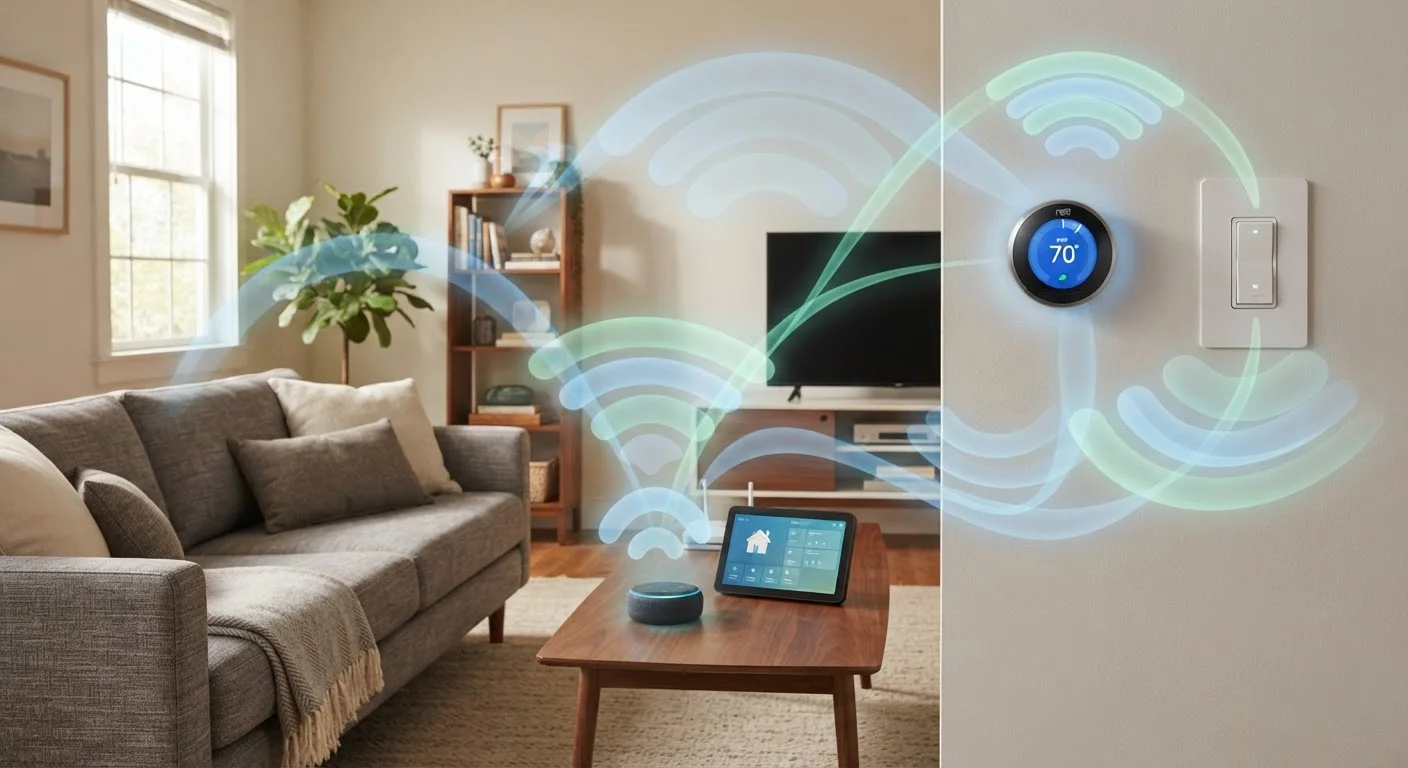
When you buy a smart bulb, lock, or thermostat, it needs a way to communicate with your phone, your hub, or other devices. That communication happens through a wireless protocol — essentially a shared language that defines how signals are sent, how far they travel, and how devices identify each other.
Most smart home devices use one of three protocols: Wi-Fi, Zigbee, or Z-Wave. Understanding the basics of each helps you avoid compatibility headaches and build a setup that actually works the way you expect. For a broader look at how home electronics communicate with each other, see this overview of home electronics connectivity.
| Wi-Fi | Zigbee | Z-Wave | |
|---|---|---|---|
| Requires a hub | No | Usually yes | Usually yes |
| Mesh networking | No | Yes | Yes |
| Frequency band | 2.4 GHz / 5 GHz | 2.4 GHz | ~908 MHz (US) |
| Interference risk | Moderate to high | Moderate | Very low |
| Device ecosystem size | Very large | Large | Moderate |
| Battery efficiency | Lower | Good | Very good |
| Max devices per network | Router-dependent | Hundreds | 232 |
Wi-Fi: Familiar but Network-Heavy
Wi-Fi smart devices connect directly to your home router using the same network your phone and laptop use. This approach is convenient — no extra hub is required, and setup is usually straightforward through a companion app.
The trade-off is network load. Each Wi-Fi smart device claims a spot on your router, and most home routers handle a limited number of simultaneous connections reliably. If you plan to add dozens of smart devices, this can slow down your network or cause connectivity drops. Wi-Fi devices also tend to consume more power than Zigbee or Z-Wave alternatives, which matters most for battery-powered sensors.
If your router struggles to reach every corner of your home, some smart devices may lose connection in dead zones. Extending your Wi-Fi coverage can help, though it adds complexity.
Check Your Router's Device Limit First
Before adding Wi-Fi smart devices, check how many simultaneous connections your router supports — many consumer routers list this in the specifications. If you're already running laptops, phones, tablets, and streaming devices, adding a dozen smart bulbs or sensors can push against that limit. Upgrading to a mesh router system can help; see this comparison of mesh vs. single routers for guidance.
Zigbee: Mesh Networking with a Wide Device Ecosystem
Zigbee is a low-power wireless protocol designed specifically for smart home and automation use. Rather than each device connecting directly to a central router, Zigbee devices form a mesh network — they relay signals through each other, so adding more devices generally improves coverage rather than reducing it.
Zigbee operates on the 2.4 GHz frequency band, which it shares with Wi-Fi and some other household electronics, meaning interference is possible in dense wireless environments. However, Zigbee uses very little bandwidth and is designed to coexist with other signals reasonably well.
One of Zigbee's strengths is its large device ecosystem. Many smart home hubs support it natively, making it easier to mix devices from different manufacturers. Smart home hubs are often the coordination layer that makes Zigbee setups work seamlessly.
Z-Wave: Dedicated Frequency, Less Interference
Z-Wave is another mesh protocol built for smart home use, but it runs on a sub-gigahertz frequency (around 908 MHz in the US) that no other common consumer device uses. This dedicated frequency is Z-Wave's most notable advantage: it faces almost no interference from Wi-Fi routers, microwaves, or Bluetooth devices.
Z-Wave devices are certified through a formal process, meaning compatibility between different manufacturers' products is generally more consistent than with some other protocols. The ecosystem is somewhat smaller than Zigbee's, but the devices available tend to be well-validated for interoperability.
Like Zigbee, Z-Wave forms a mesh network. Each Z-Wave network supports up to 232 devices — more than enough for nearly any residential setup. Battery life on Z-Wave sensors and switches is typically strong, since the protocol is engineered for low power consumption.
Z-Wave Frequencies Vary by Region
Z-Wave devices are manufactured for specific regional frequencies — a device certified for the US market (908 MHz) is not interchangeable with one made for Europe or Asia. Buying Z-Wave devices from international marketplaces or resellers may result in devices that cannot join your US-based network. Always verify regional compatibility before purchasing.
How to Choose the Right Protocol for Your Home
For most people starting out, the protocol is determined by the devices they buy rather than a deliberate choice. However, understanding the differences helps you plan ahead:
- Start small with Wi-Fi if you want simplicity and only plan to add a handful of devices. Avoid it if your router is already strained.
- Choose Zigbee if you already use a hub that supports it or expect to build out a larger ecosystem of sensors, switches, and bulbs.
- Consider Z-Wave if you want the most interference-resistant option or live in an area with heavy wireless congestion.
It's also worth noting that the Matter standard — a newer protocol backed by major tech companies — is designed to bridge these ecosystems, though adoption is still maturing. Considering privacy and data implications is also worthwhile before expanding any smart home setup; this article on smart home privacy covers those trade-offs clearly.