Why This Choice Matters More Than It Used to
Home audio has quietly become more complicated. A decade ago, most households had one stereo system plugged into a wall. Today, the same family might have a soundbar in the living room, speakers on the patio, and music playing in the kitchen — all from different devices. The question of whether to run speaker wire or rely on Wi-Fi and Bluetooth now has real consequences for how that audio performs day to day.
The two approaches — wired and wireless — don't just differ in how cables are involved. They differ in reliability, audio fidelity, cost of setup, and how much flexibility you gain (or lose) over time. Understanding those trade-offs helps you set up a system that actually fits how you live. For a related look at how connectivity choices affect streaming performance, see how Wi-Fi and wired connections compare for streaming.
How Each Approach Works
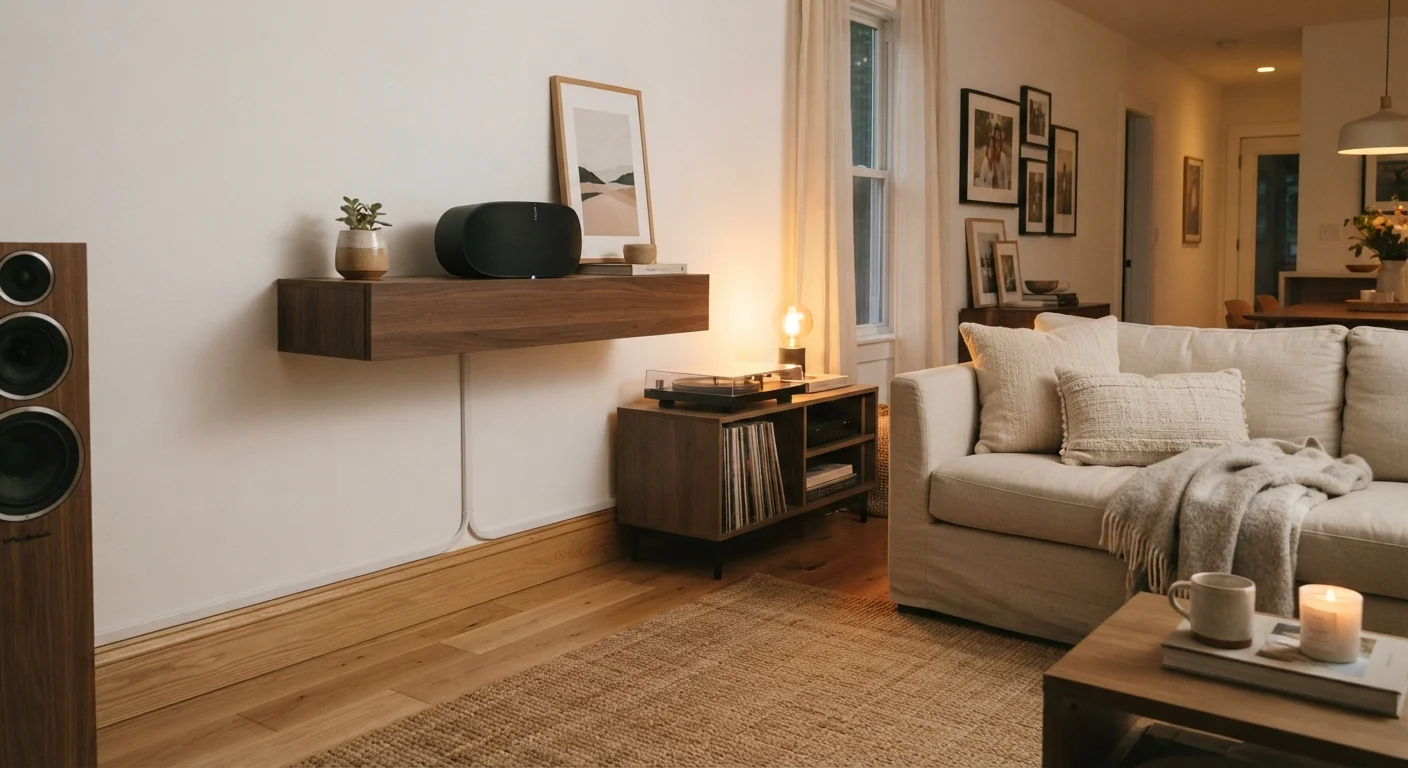
Wired audio uses physical speaker cable — typically running from an amplifier or receiver to each speaker. The signal travels as an analog or digital electrical current with no wireless transmission involved. The setup process usually means routing cable through walls, along baseboards, or under flooring, which takes time but creates a tidy, permanent result.
Wireless audio transmits sound over Wi-Fi, Bluetooth, or proprietary protocols such as those used in multi-room streaming systems. Powered speakers receive both the audio signal and power (either from an outlet or a battery) independently, with no physical connection to a central receiver required. Some systems use dedicated wireless protocols rather than standard Wi-Fi — a distinction worth understanding if you're also building out smart home devices. See how Wi-Fi, Zigbee, and Z-Wave differ for context on what's running beneath those connections.
| Criterion | Wired Audio | Wireless Audio |
|---|---|---|
| Audio consistency | Very high — no signal loss | Good, but network-dependent |
| Setup effort | High — cable routing required | Low — plug in and connect |
| Placement flexibility | Limited by cable reach | High — anywhere in range |
| Susceptibility to interference | Very low | Moderate (Wi-Fi, Bluetooth) |
| Multi-room capability | Possible but complex | Easy with compatible systems |
| Ongoing maintenance | Minimal after installation | Firmware updates, batteries |
| Renter-friendly | No — permanent installation | Yes — no modifications needed |
Sound Quality and Reliability
Wired systems have a measurable advantage when it comes to consistent audio fidelity. Because the signal travels over a direct electrical connection, there's no compression, no packet loss, and no latency introduced by wireless transmission. This matters most in dedicated listening rooms or home theater setups where audio accuracy and synchronization with video are priorities.
Wireless audio has improved substantially. Many modern wireless systems transmit at high bit rates that are indistinguishable from wired audio in everyday listening conditions. However, Wi-Fi congestion in dense residential areas, Bluetooth range limitations, and interference from other 2.4GHz devices can all affect performance. If your home network already handles multiple streaming devices, smart TVs, and video calls, adding wireless speakers increases the load. A mesh Wi-Fi network can help distribute that load more evenly across your home.
2.4 GHz
Shared frequency for many wireless audio devices
Bluetooth and many Wi-Fi networks share the 2.4 GHz band, which can create interference in homes with multiple connected devices.
~30 ft
Typical effective Bluetooth range indoors
Walls, furniture, and competing signals can reduce practical Bluetooth range well below the theoretical maximum in real home environments.
Installation, Flexibility, and Long-Term Ownership
Wired setups require an upfront investment of time and, potentially, professional labor if cables need to run through walls. Once installed, however, they're largely maintenance-free — no firmware updates to manage, no batteries to replace, and no network dependency to troubleshoot. They're also less likely to become obsolete due to changes in wireless standards.
Wireless systems lower the barrier to entry considerably. You can place a speaker on a shelf, connect it to your network, and have it playing within minutes. For renters or anyone who wants to avoid permanent modifications, this is a significant practical advantage. The trade-off is ongoing dependency on your home network and the need to keep devices updated and charged (if battery-powered). For a broader look at how this wired-versus-cordless dynamic plays out across home devices, corded vs. cordless appliances covers similar ground. If you're thinking about pairing a wired or wireless speaker system with a larger home theater setup, soundbars versus surround systems walks through how those components fit together.
A Note on 'Wireless' Speaker Cables
Some speakers marketed as wireless still require a power cable, even if the audio signal is transmitted wirelessly. True cable-free speakers rely on internal batteries. When evaluating a wireless audio system, it's worth checking whether each speaker still needs to be near an electrical outlet — this can affect where you're actually able to place them.